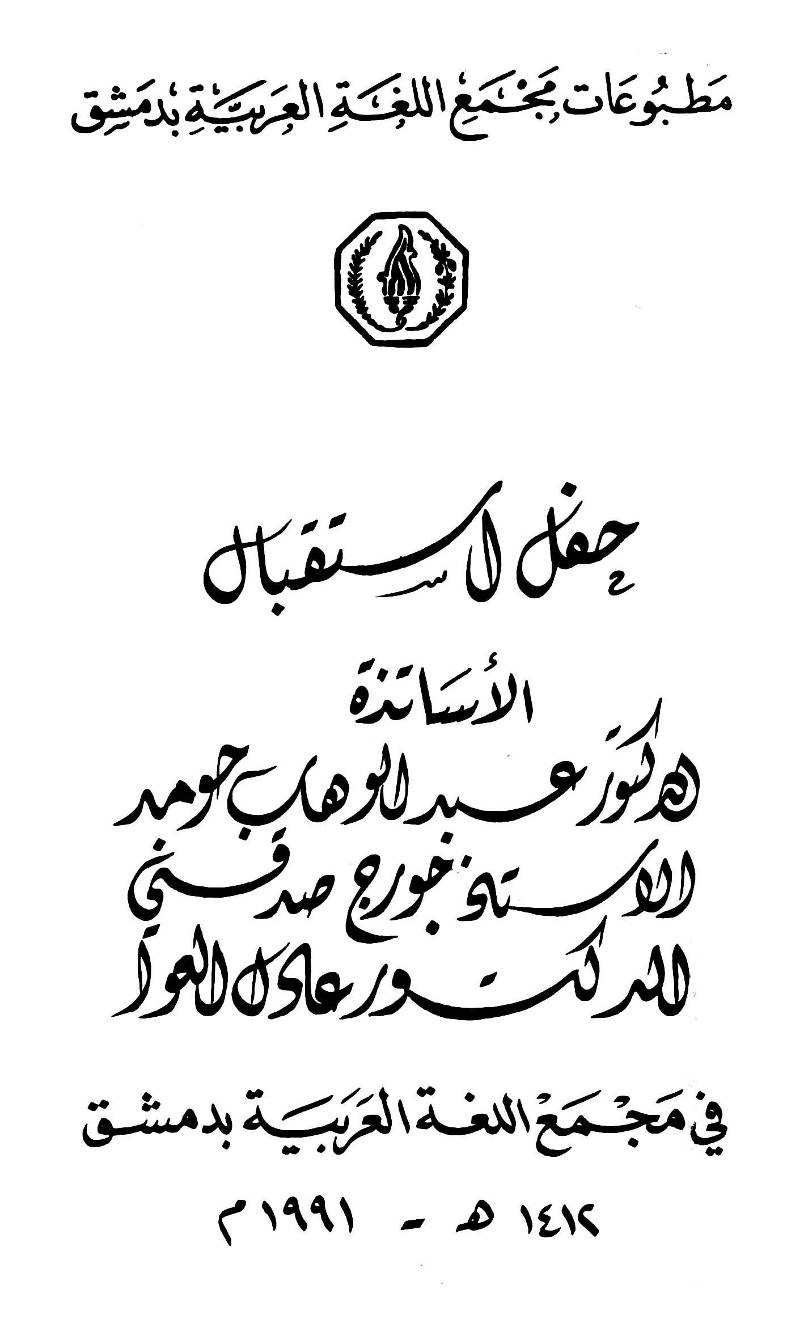
Appendix (3): The Arabic Language Academy Induction and the 2002 Memorial Eulogies
A. The reception held for the author as a new member of the Arabic Language Academy, and the addresses delivered at it
B. Some words of eulogy for the author, as they appeared in the official newspapers
A. The Reception Held for the Author as a New Member of the Arabic Language Academy, and the Addresses Delivered at It
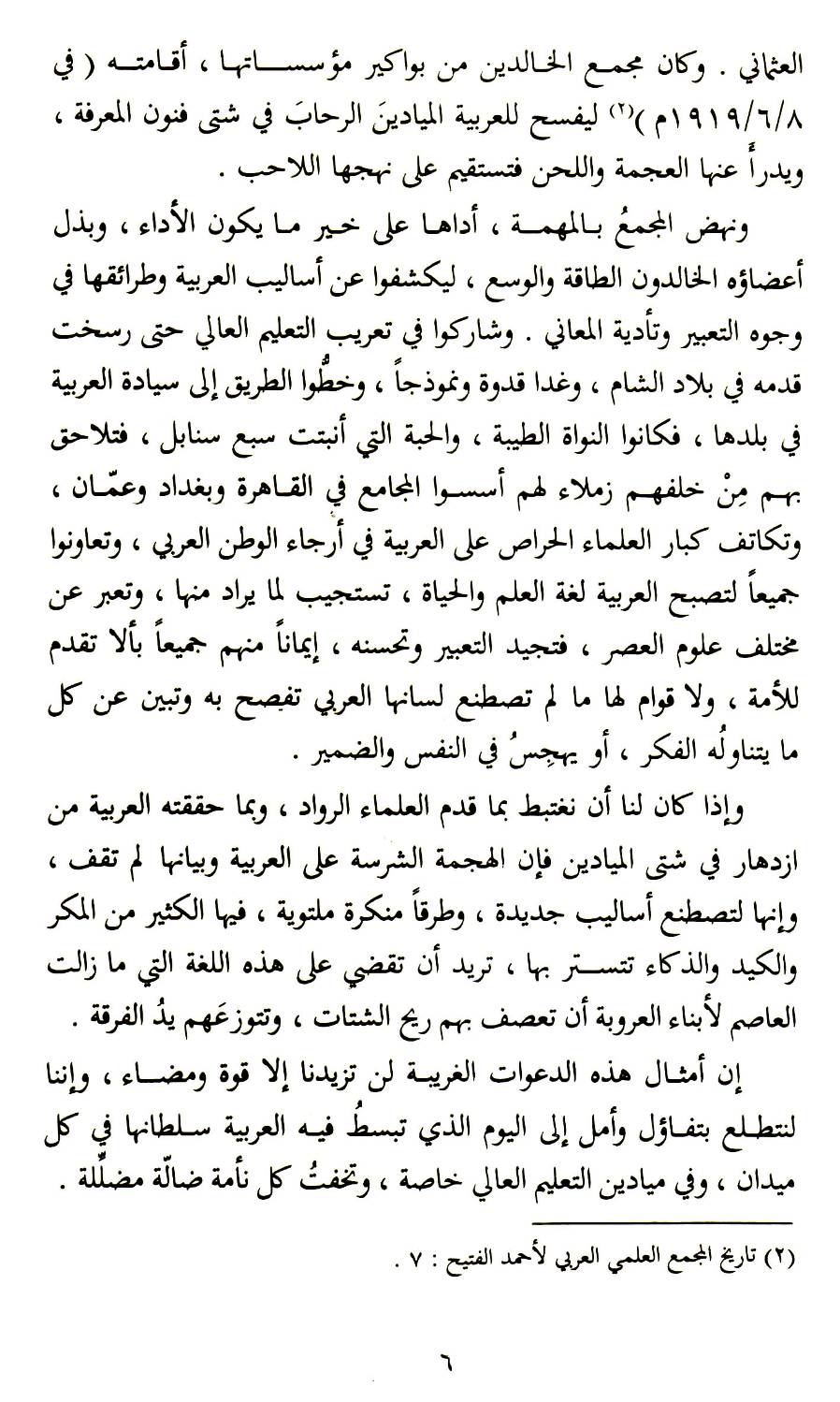
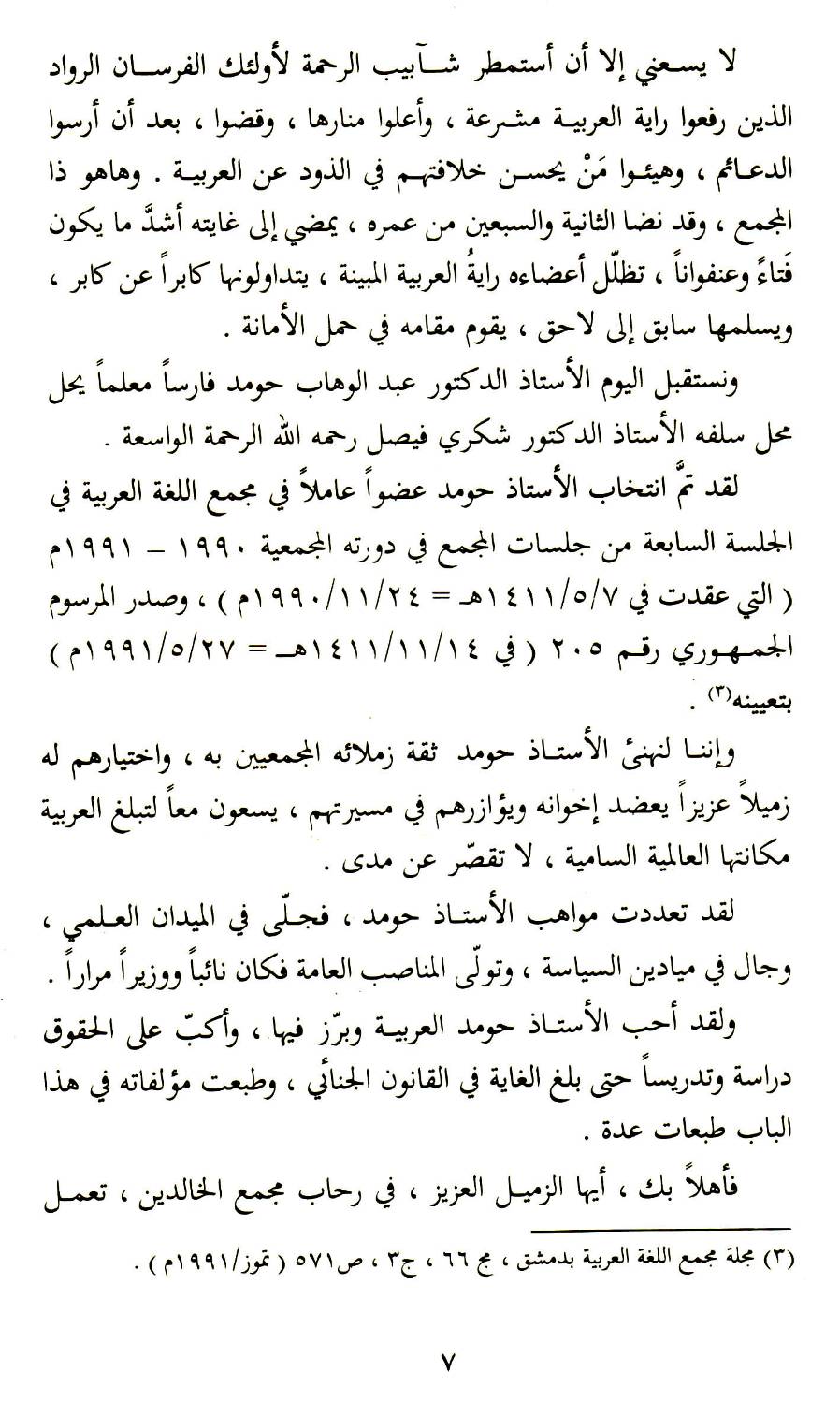
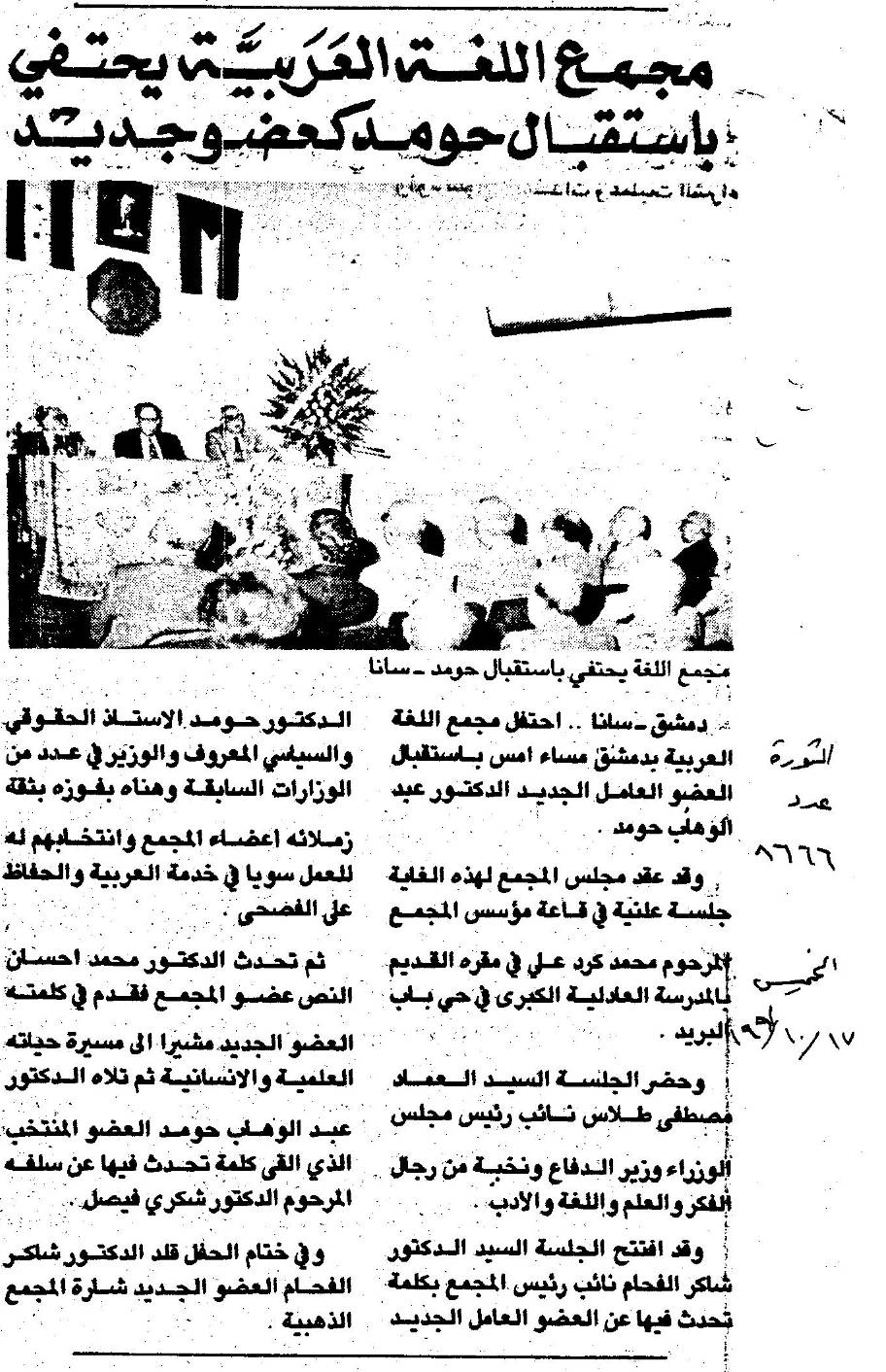
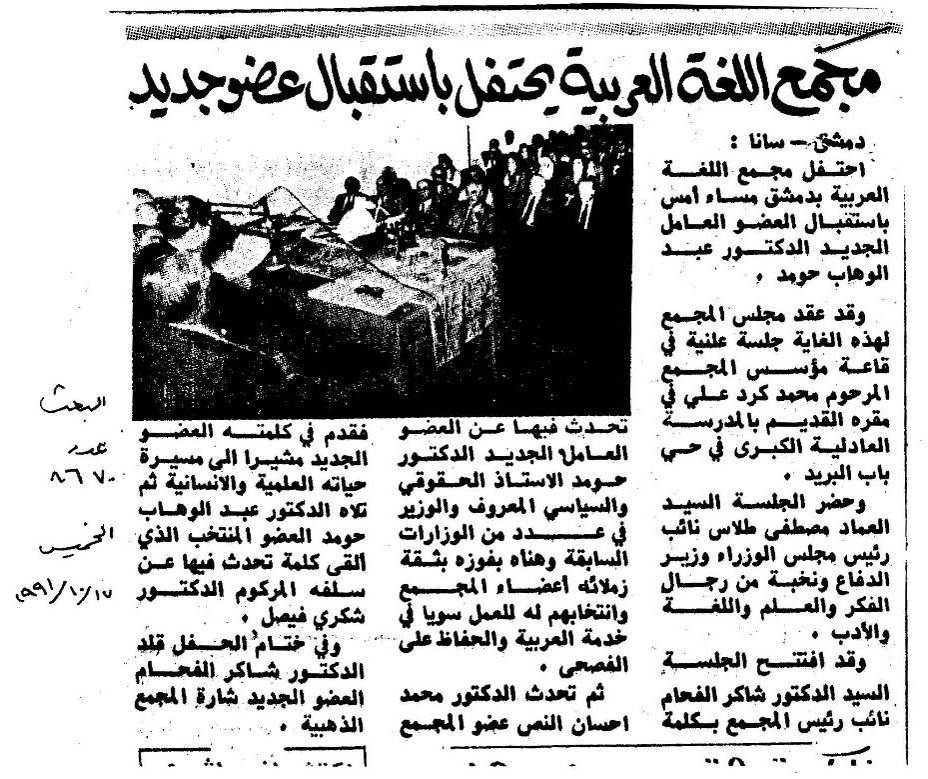
The Arabic Language Academy Celebrates the Induction of Homad as a New Member
Damascus, SANA: The Arabic Language Academy in Damascus celebrated, yesterday evening, the induction of its new full member, Dr. AbdulWahab Homad.
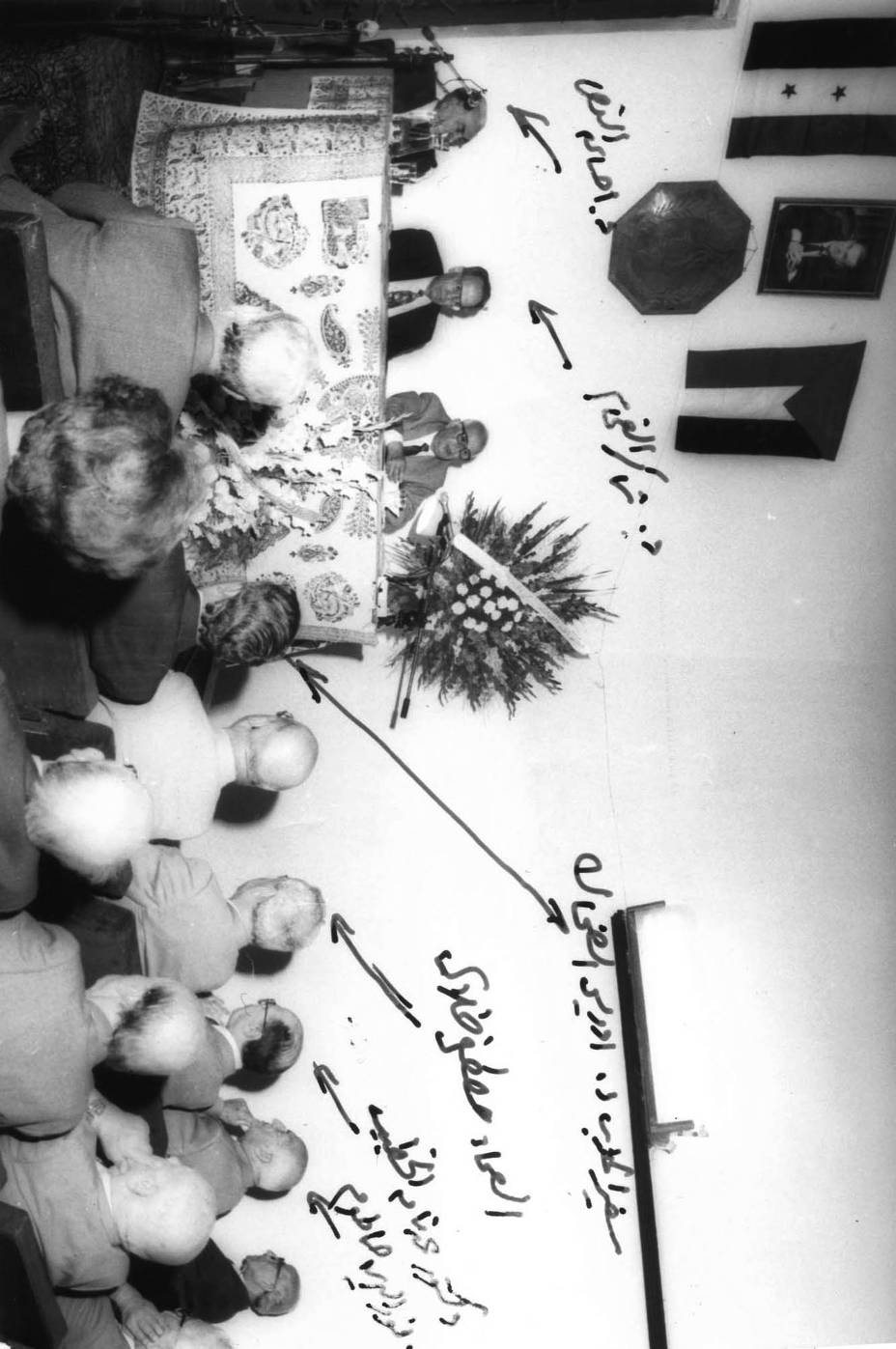
The Academy's council held an open session for this occasion, in the hall named for the Academy's founder, the late Muhammad Kurd Ali, at its old headquarters in the Great Adiliyya School, in the Bab al-Barid quarter.
Attending the session were General Mustafa Tlass, Deputy Prime Minister and Minister of Defense, and a select gathering of men of thought, learning, and letters.
The session was opened by Dr. Shaker al-Fahham, Vice President of the Academy, with an address on the new full member, Dr. Homad, the well-known professor of law and statesman, who had held a number of ministerial posts, congratulating him on winning his fellow Academy members' trust and their election of him to work alongside them in the service of Arabic and the preservation of its classical form.
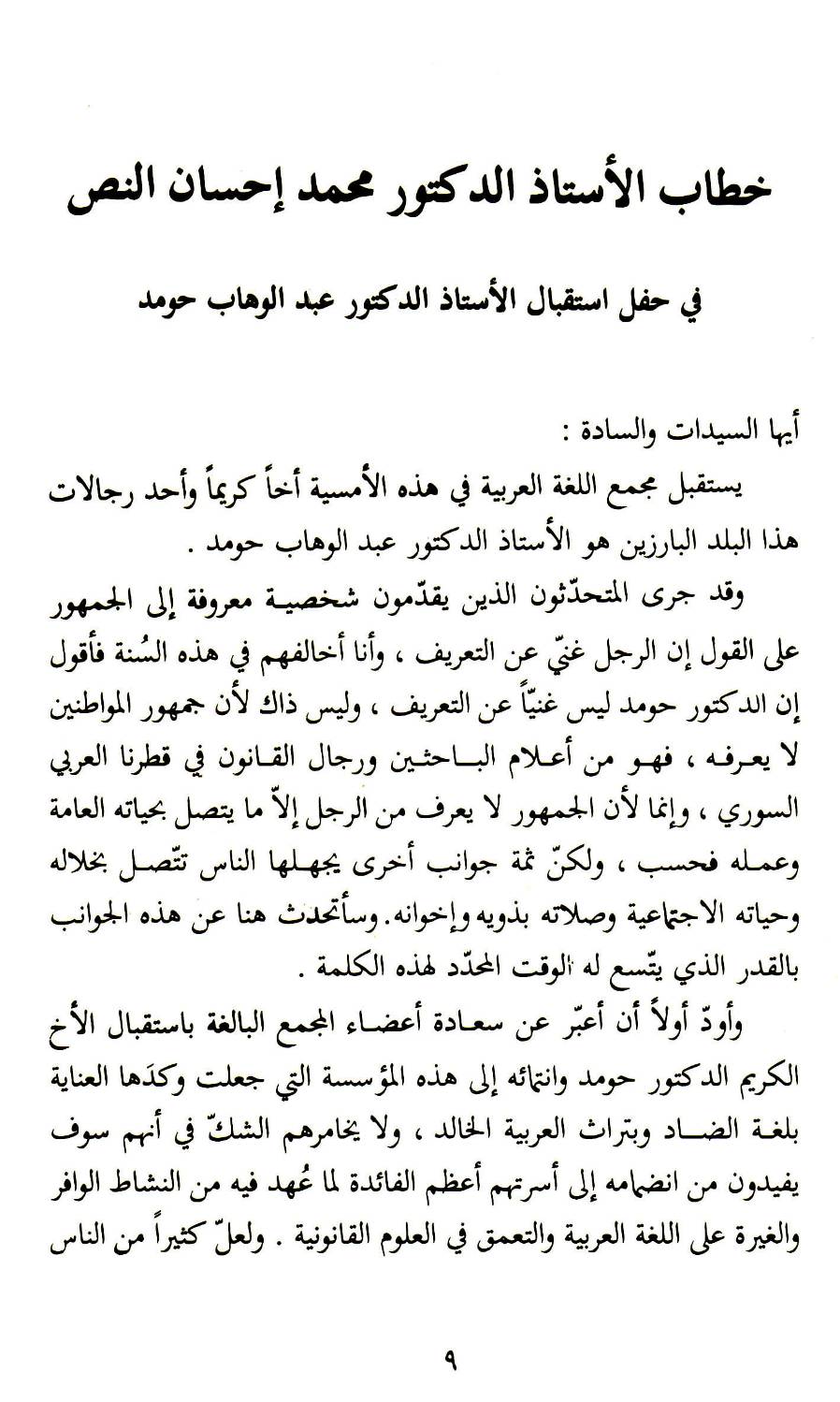
Dr. Muhammad Ihsan al-Nass, a member of the Academy, then spoke, introducing the new member in his own address and pointing to the course of his scholarly and human life, followed by Dr. AbdulWahab Homad, the newly elected member, who delivered an address on his own predecessor, the late Dr. Shukri Faisal.
At the close of the reception, Dr. Shaker al-Fahham pinned the Academy's own gold insignia on the new member.
Al-Thawra, issue 8666
Thursday, 17/10/1991
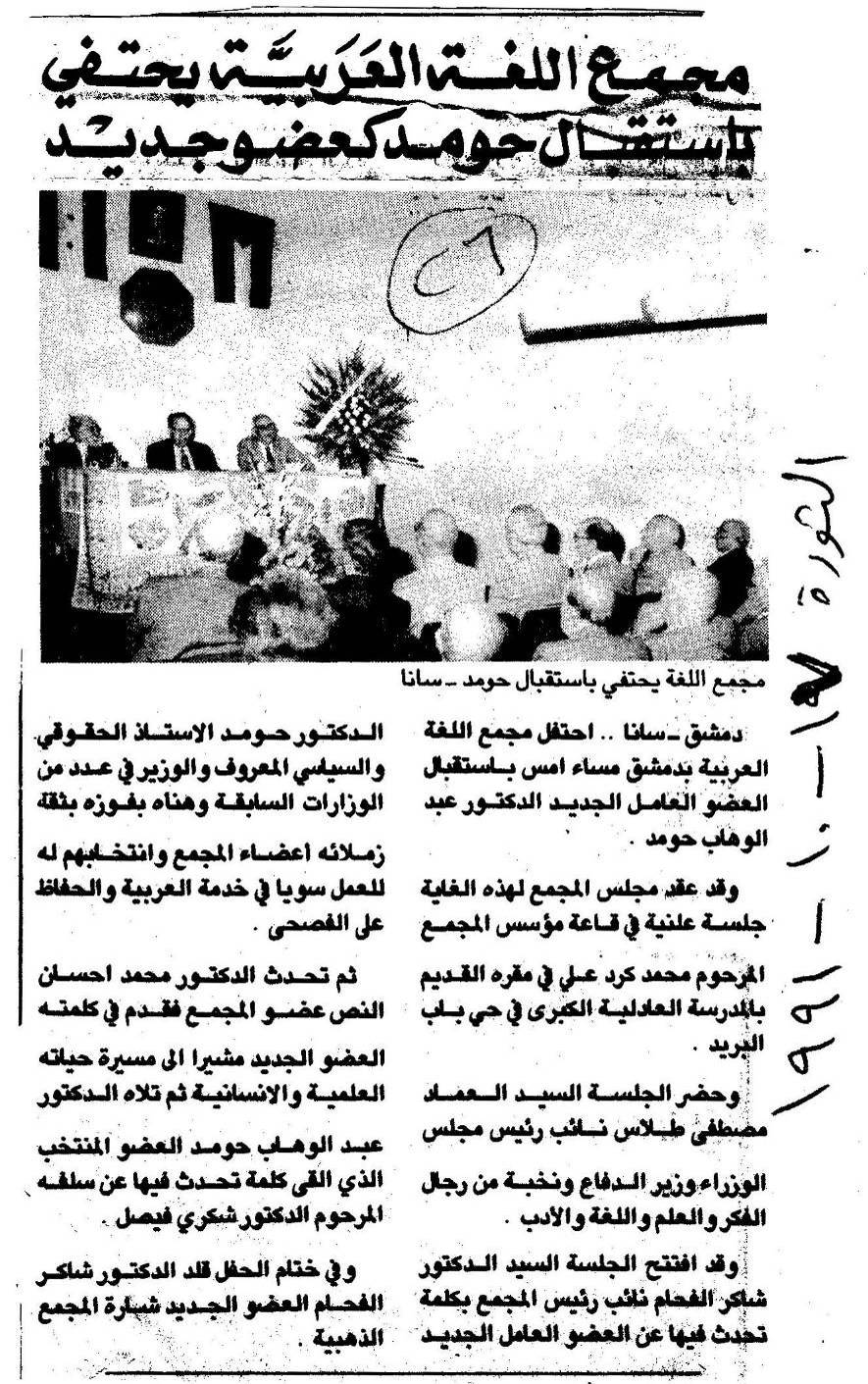
The Arabic Language Academy Celebrates the Induction of a New Member
Damascus, SANA: The Arabic Language Academy in Damascus celebrated, yesterday evening, the induction of its new full member, Dr. AbdulWahab Homad.
The Academy's council held an open session for this occasion, in the hall named for the Academy's founder, the late Kurd Ali, at its old headquarters in the Great Adiliyya School, in the Bab al-Barid quarter.
Attending the session were General Mustafa Tlass, Deputy Prime Minister and Minister of Defense, and a select gathering of men of thought, learning, language, and letters.
The session was opened by Mr. Shaker al-Fahham, Vice President of the Academy, with an address on the new full member, Dr. Homad, the well-known professor of law and statesman, and minister in a number of previous cabinets, congratulating him on winning his fellow Academy members' trust and their election of him to work alongside them in the service of Arabic and the preservation of its classical form.
Dr. Muhammad Ihsan al-Nass, a member of the Academy, then spoke, introducing the new member in his own address and pointing to the course of his scholarly and human life, followed by Dr. AbdulWahab Homad, the newly elected member, who delivered an address on his own predecessor, the late Dr. Shukri Faisal.
At the close of the reception, Dr. Shaker al-Fahham pinned the Academy's own gold insignia on the new member.
Al-Baath, issue 867
Thursday, 17/10/1991
The Arabic Language Academy Celebrates the Induction of Homad as a New Member
Damascus, SANA: The Arabic Language Academy in Damascus celebrated, yesterday evening, the induction of its new full member, Dr. AbdulWahab Homad.
The Academy's council held an open session for this occasion, in the hall named for the Academy's founder, the late Muhammad Kurd Ali, at its old headquarters in the Great Adiliyya School, in the Bab al-Barid quarter.
Attending the session were General Mustafa Tlass, Deputy Prime Minister and Minister of Defense, and a select gathering of men of thought, learning, and letters.
The session was opened by Dr. Shaker al-Fahham, Vice President of the Academy, with an address on the new full member, Dr. Homad, the well-known professor of law and statesman, who had held a number of ministerial posts, congratulating him on winning his fellow Academy members' trust and their election of him to work alongside them in the service of Arabic and the preservation of its classical form.
Dr. Muhammad Ihsan al-Nass, a member of the Academy, then spoke, introducing the new member in his own address and pointing to the course of his scholarly and human life, followed by Dr. AbdulWahab Homad, the newly elected member, who delivered an address on his own predecessor, the late Dr. Shukri Faisal.
At the close of the reception, Dr. Shaker al-Fahham pinned the Academy's own gold insignia on the new member.
Al-Thawra, 17/10/1991
B. Some Words of Eulogy for the Author, as They Appeared in the Official Newspapers
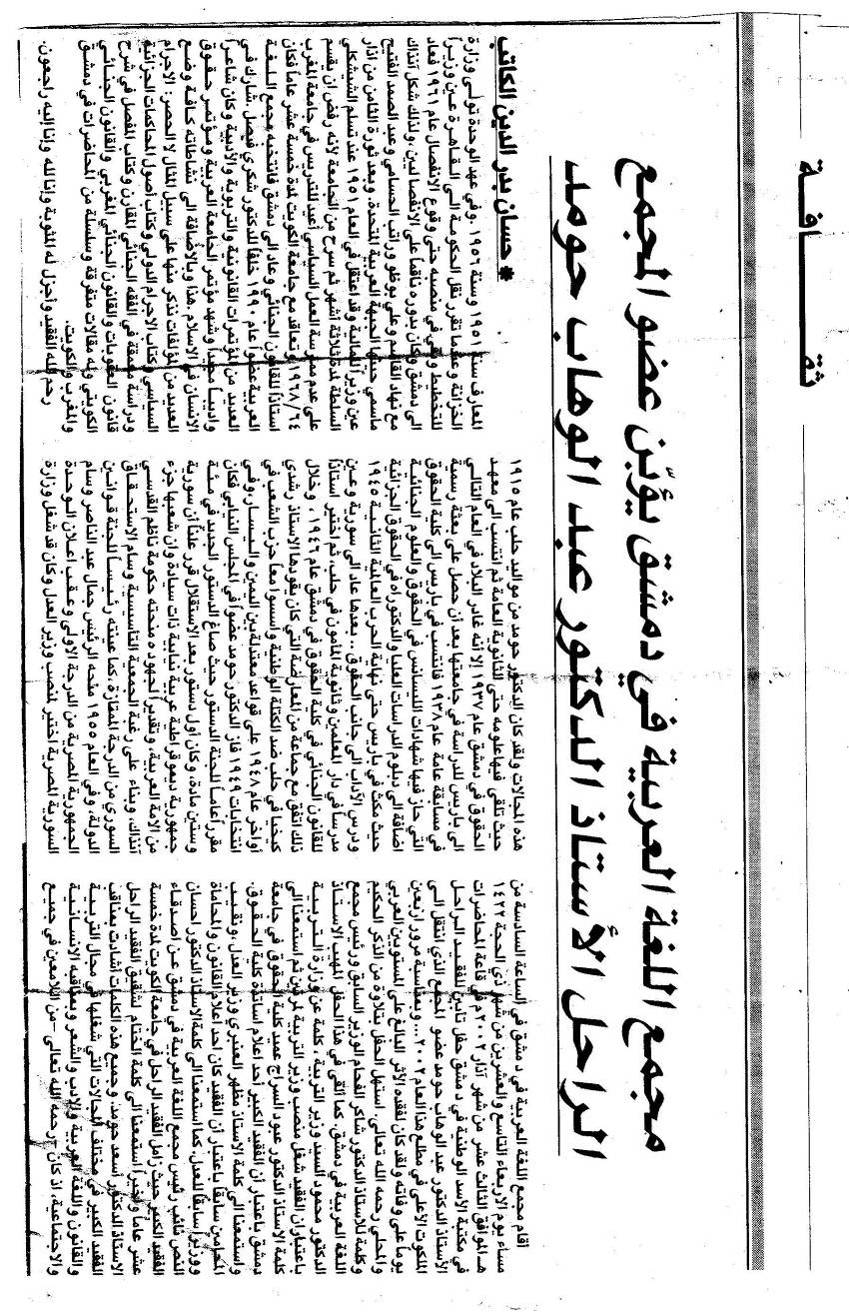
The Arabic Language Academy in Damascus Mourns Its Departed Member, Professor Dr. AbdulWahab Homad
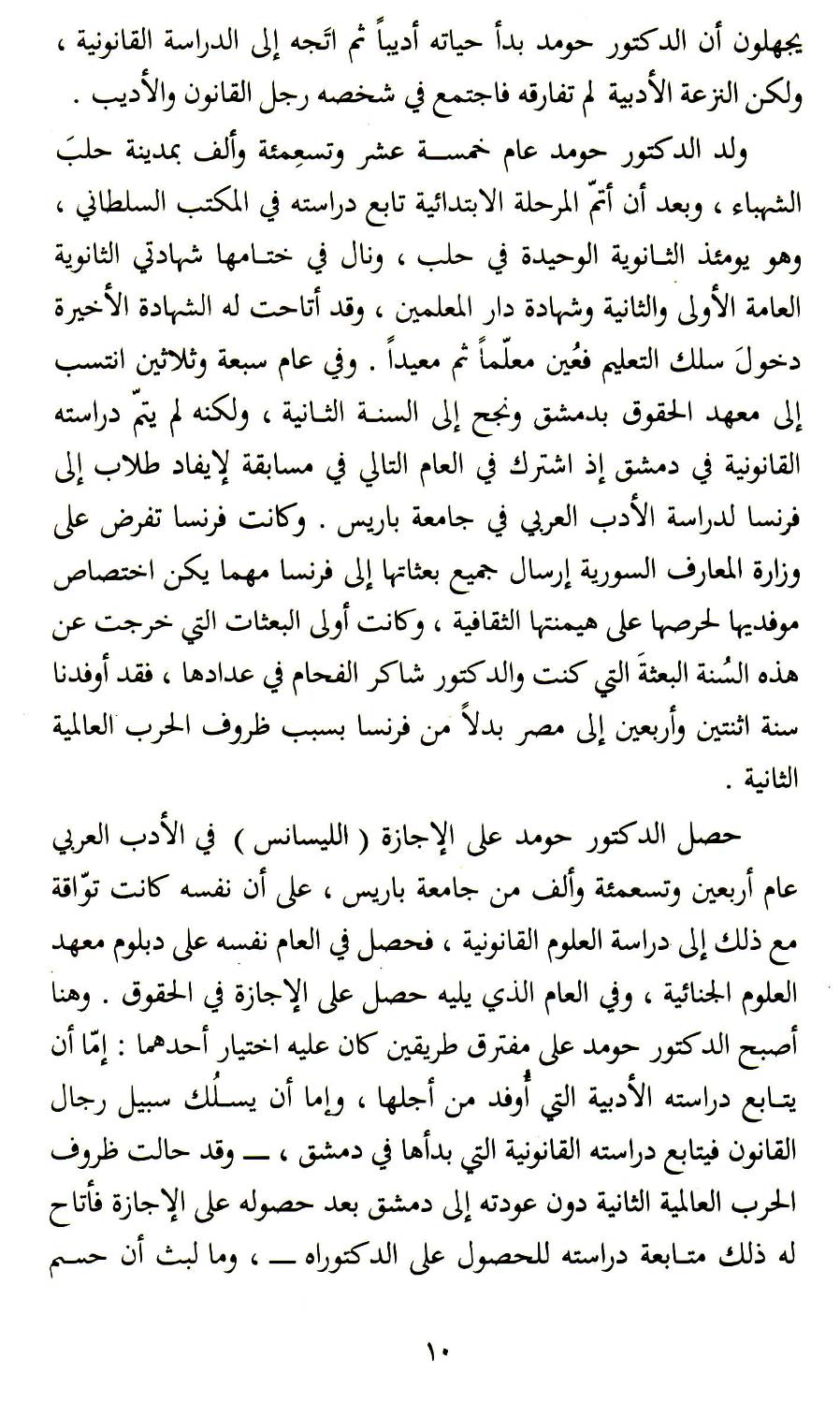
The Arabic Language Academy in Damascus held, at six in the evening on Wednesday, 29 Dhu al-Hijjah 1422 AH, corresponding to 13 March 2002, in the lecture hall of the al-Assad National Library in Damascus, a memorial service for the late Professor Dr. AbdulWahab Homad, a member of the Academy who passed into the higher kingdom at the start of this year, 2002, marking the fortieth day since his death. His loss had a profound impact, both across the Arab world and at home, may God have mercy on him. The ceremony opened with a recitation from the Noble Quran and an address by Professor Dr. Shaker al-Fahham, former minister and president of the Arabic Language Academy in Damascus. At this solemn ceremony, Professor Dr. Mahmoud al-Sayyed, Minister of Education, also delivered an address on behalf of the Ministry of Education, given that the departed had held the post of Minister of Education twice. We then heard an address from Professor Dr. Aboud al-Sarraj, Dean of the Faculty of Law at Damascus University, given that the great departed was one of the leading professors of the Faculty of Law. We heard an address from Mr. Mazhar al-Anbari, Minister of Justice and former head of the Bar Association, given that the departed was one of the leading figures of law and legal practice, and a former Minister of Justice. We also heard an address from Professor Dr. Ihsan al-Nass, Vice President of the Arabic Language Academy in Damascus, on behalf of the great departed's own friends, having been his colleague at Kuwait University for fifteen years, and finally we heard the closing address from the departed's own brother, Professor Dr. As'ad Homad. All of these addresses praised the great departed's own virtues across the various fields he had worked in, education, law, the Arabic language, literature, and poetry, and his own human and social virtues, for he was, may God have mercy on him, a shining figure in every one of these fields. Dr. Homad was born in Aleppo in 1915, where he received his education through secondary school, before enrolling at the Institute of Law in Damascus in 1937, though he left the country the following year for Paris, to study at its university, having won an official scholarship through open competition in 1938. In Paris, he enrolled at the Faculty of Law, where he earned a licence in law and in criminal sciences, along with a diploma of advanced studies and a doctorate in criminal law, remaining in Paris until the end of the Second World War in 1945, studying literature alongside law. He then returned to Syria, and was appointed a teacher at the Teachers' College and al-Ma'moun Secondary School in Aleppo, before being chosen as professor of criminal law at the Faculty of Law in Damascus in 1946, during which time he came to an understanding with a group of the opposition led by Mr. Rushdi al-Kikhya in Aleppo against the National Bloc, and together they founded the People's Party in late 1948, on moderate principles between right and left. In the 1949 elections, Dr. Homad won a seat in the Chamber of Deputies, and served as the constitutional committee's general rapporteur, drafting the new constitution in one hundred and sixty articles, the first constitution of the independence era to openly declare Syria a democratic, parliamentary Arab republic of full sovereignty, its people part of the Arab nation. In recognition of his own efforts, Nazim al-Qudsi's government at the time awarded him, at the Constituent Assembly's own request, the Syrian Order of Merit, First Class, and appointed him chairman of the State Laws Committee. In 1955, President Gamal Abdel Nasser awarded him the Order of the Egyptian Republic, First Class, and, following the announcement of the Syrian-Egyptian union, he was chosen for the post of Minister of Justice, having already held the Ministry of Education in 1951 and 1950. During the Union, he held the Ministry of the Treasury, and when the government's transfer to Cairo was decided, he was appointed Minister of Planning, remaining in this post until the secession took place in 1961, after which he returned to Damascus, holding, in his turn, a fierce resentment toward the secessionists, and for this reason formed, along with Nihad al-Qasim, Ali Bouzo, Rateb al-Hasami, and Abdel Samad al-Fatih, what came to be called, at the time, the United Arab Front. After the 8 March revolution, he was appointed Minister of Finance. He had been arrested in 1951, when Shishakli seized power, for three months, and was then dismissed from the university for refusing to swear an oath not to engage in political activity. He was reinstated to teaching at the University of Morocco from 1964 to 1968, and contracted with Kuwait University for fifteen years, serving as professor of criminal law, before returning to Damascus, where the Arabic Language Academy elected him a member in 1990, succeeding Dr. Shukri Faisal. He took part in numerous legal, educational, and literary conferences, was a fine poet and man of letters, and attended the Arab League Conference and the Conference on Human Rights in Islam. In addition to all his other activities, he wrote numerous works, among them, to name but a few: Al-Ijram al-Siyasi (Political Crime), Al-Ijram al-Dawli (International Crime), Usul al-Muhakamat al-Jaza'iyya (Criminal Procedure), an in-depth study in comparative criminal jurisprudence, Al-Mufassal fi Sharh Qanun al-Uqubat (A Detailed Commentary on the Penal Code), Moroccan criminal law, and Kuwaiti criminal law, along with scattered articles and a series of lectures in Damascus, Morocco, and Kuwait.
May God have mercy on the departed and grant him a rich reward. Indeed, to God we belong, and to Him we return.
Hassan Badr al-Din, Writer
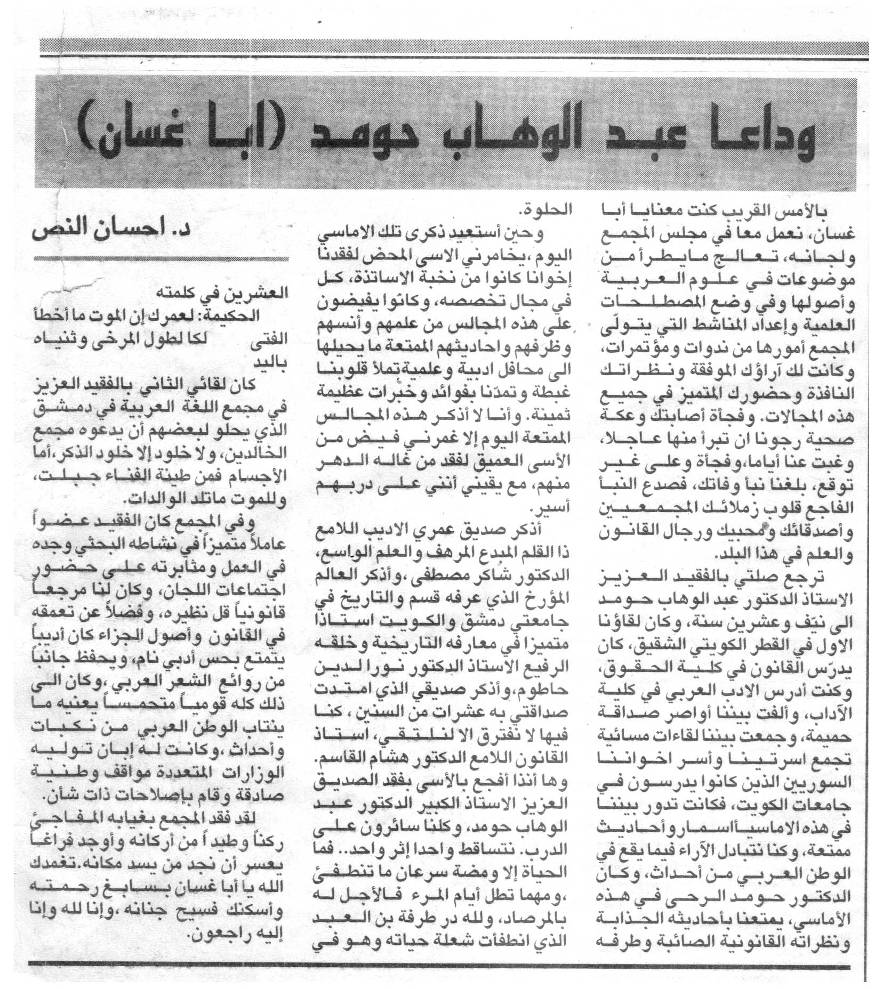
Farewell, AbdulWahab Homad (Abu Ghassan)
By Ihsan al-Nass
Only recently, Abu Ghassan, you were with us, working together in the Academy's council and its committees, addressing whatever questions arose in the sciences of Arabic and its own foundations, in setting scientific terminology, and preparing the seminars and conferences the Academy oversees, and you brought to all of this your own sound judgment, your penetrating insight, and your distinguished presence. Then, suddenly, illness struck you, and we hoped you would recover from it quickly, and you were absent from us for some days, and then, suddenly and unexpectedly, news of your death reached us, and this devastating news broke the hearts of your fellow Academy members, your friends, your admirers, and the men of law and learning across this country.
My own connection to our dear departed friend, Professor Dr. AbdulWahab Homad, goes back more than twenty years, and our first meeting was in the sister country of Kuwait, where he taught law at the Faculty of Law, while I taught Arabic literature at the Faculty of Arts. A close friendship grew between us, and we came to share evening gatherings bringing together our own two families and the families of our Syrian brothers teaching at Kuwait's universities, and these evenings were filled with delightful conversation and storytelling, exchanging our own views on the events unfolding across the Arab world, with Dr. Homad the very life of these evenings, delighting us with his own captivating conversation, his own sound legal judgment, and his sweet wit.
As I recall those evenings today, I am overcome with pure sorrow at the loss of brothers who were among the finest of professors, each in his own field of specialization, who used to shower these gatherings with their own knowledge, warmth, wit, and delightful conversation, turning them into literary and scholarly salons that filled our hearts with joy and gave us great and precious benefit and experience. I cannot recall these delightful gatherings today without being overwhelmed by a deep sorrow at the loss of those time has already taken from among them, certain, as I am, that I too walk their very same road.
I recall my own lifelong friend, the brilliant man of letters, of refined and creative pen and vast learning, Dr. Shaker Mustafa, and I recall the scholarly historian known to the History Departments of both Damascus and Kuwait Universities as a distinguished professor of historical knowledge and noble character, Professor Dr. Nour al-Din Hatoum, and I recall my friend of decades, whose friendship never once parted us except to bring us together again, the brilliant professor of law, Dr. Hisham al-Qasim.
And now I find myself struck with sorrow at the loss of my dear friend, the great professor Dr. AbdulWahab Homad, and we are all walking this same road, falling one after another. For life is nothing but a fleeting spark, soon extinguished, and however long a man's days may stretch, death lies ever in wait for him. How well Tarafa ibn al-Abd put it, he whose own life's flame was extinguished at the age of twenty, in his own wise words:
"By your life, death, when it does not miss its mark upon a young man,
is like a rope let loose, its two ends still held in the very hand that released it."
My second meeting with our dear departed friend was at the Arabic Language Academy in Damascus, which some are fond of calling the Academy of the Immortals, though there is no immortality but that of memory, for bodies alone are molded from the clay of mortality, and to death belongs whatever mothers bring forth.
At the Academy, the departed was a full member of real distinction in his own research activity, his own diligence in work, and his own steady attendance at committee meetings, and he was, to us, a legal authority with few equals, and beyond his own deep grounding in law and criminal procedure, he was a man of letters with a real, well-developed literary sensibility, who had committed to memory a good share of the finest Arabic poetry, and was, on top of all this, a passionate nationalist, deeply concerned with whatever calamities and events befell the Arab homeland, and, during his own various ministerial terms, held genuine, sincere patriotic positions and carried out reforms of real significance.
With his sudden absence, the Academy has lost one of its firmest pillars, leaving behind a gap not easily filled by anyone else. May God envelop you, Abu Ghassan, in His abundant mercy, and grant you a place in His own spacious paradise. Indeed, to God we belong, and to Him we return.
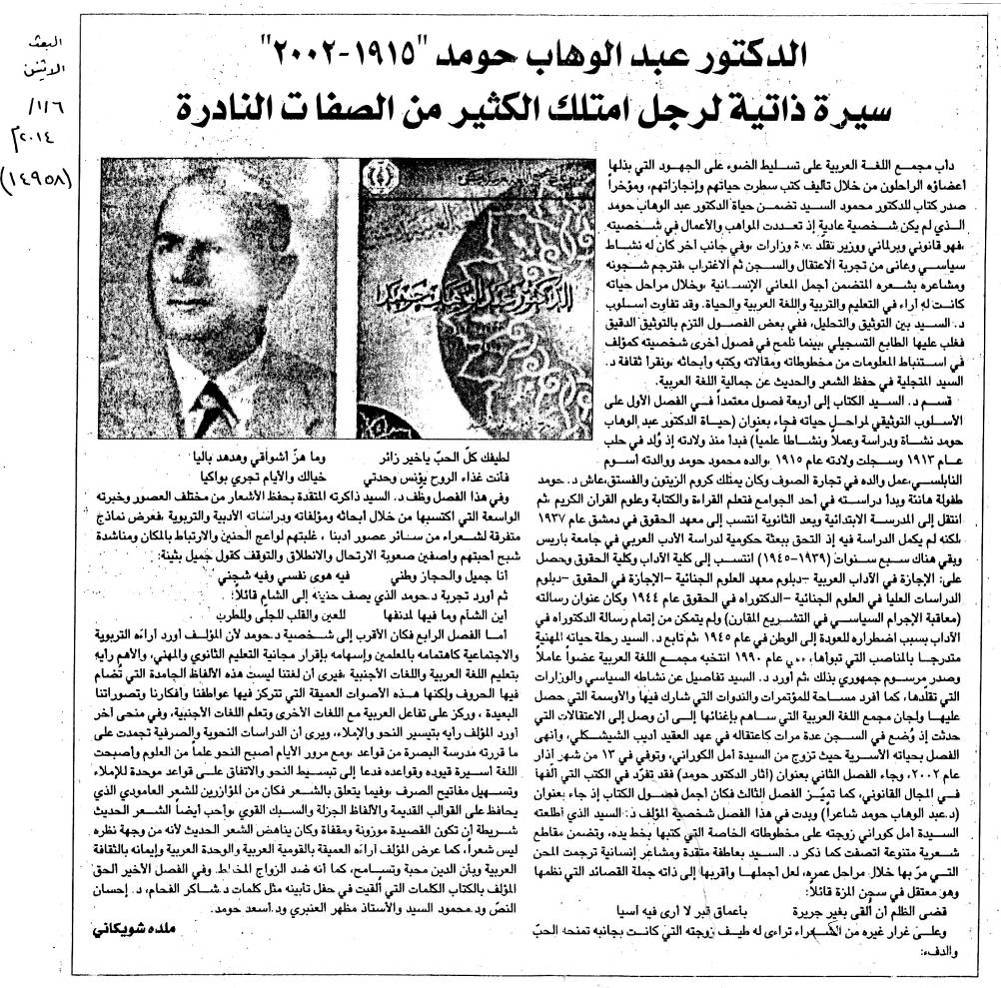
Dr. AbdulWahab Homad (1915-2002): The Autobiography of a Man Who Possessed Many Rare Qualities
The Arabic Language Academy has long made a practice of shining a light on the efforts of its own departed members, through books recording their lives and achievements, and a book by Dr. Mahmoud al-Sayyed has recently been published, covering the life of Dr. AbdulWahab Homad, who was no ordinary figure, for his own talents and pursuits were many, a legal scholar, a parliamentarian, and a minister who held several cabinet posts, and, in another respect, a man of political activity who endured the experience of detention and imprisonment, then exile, and who gave voice to his own sorrows and feelings through poetry filled with the most beautiful of human sentiments. Across the various stages of his life, he held views on education, upbringing, the Arabic language, and life itself. Dr. al-Sayyed's own approach shifts between documentation and analysis: in some chapters, he holds closely to precise documentation, giving these chapters a records-based character, while in others we glimpse the author's own personality as he draws information out of the departed's own manuscripts, articles, books, and research, and we see Dr. al-Sayyed's own erudition on display, in his command of poetry and his discussion of the beauty of the Arabic language.
Dr. al-Sayyed divided the book into four chapters, relying, in the first chapter, on a documentary approach to the stages of his life, titled "The Life of Dr. AbdulWahab Homad: Upbringing, Education, Career, and Scholarly Activity," beginning with his own birth, for he was born in Aleppo in 1913, though his birth was registered in 1915, his father Mahmoud Homad and his mother Asoum al-Nabulsi, his father working in the wool trade and owning olive and pistachio groves. Dr. Homad lived a happy childhood, and began his own education at a mosque, where he learned reading, writing, and the sciences of the Noble Quran, before moving on to primary school, and, after secondary school, enrolled at the Institute of Law in Damascus in 1937, though he did not complete his studies there, joining instead a government mission to study Arabic literature at the University of Paris, remaining there for seven years (1939-1945), enrolling at the Faculty of Arts and the Faculty of Law, and obtaining: a licence in Arabic literature, a diploma from the Institute of Criminal Sciences, a licence in law, a diploma of advanced studies in criminal sciences, and a doctorate in law in 1944, his thesis titled "The Punishment of Political Crime in Comparative Legislation." He was unable to complete a doctoral thesis in literature as well, owing to his own need to return home in 1945. Dr. al-Sayyed then traces the course of his own professional life, moving through the posts he held, and, in 1990, the Arabic Language Academy elected him a full member, confirmed by a republican decree. Dr. al-Sayyed then details his own political activity and the ministries he held, devoting space as well to the conferences and seminars he took part in, the honors he received, and the Arabic Language Academy's own committees he contributed to enriching, before reaching the arrests he suffered, having been imprisoned on several occasions, including his own detention under Colonel Adib al-Shishakli's rule, and closing the chapter with his own family life, his marriage to Mrs. Amal al-Kourani, and his death on 13 March 2002. The second chapter, titled "The Works of Dr. Homad," covers his own singular achievement in the books he wrote in the field of law, while the third chapter stands out as the most beautiful chapter in the book, titled "Dr. AbdulWahab Homad as Poet," in which the personality of the author, Dr. al-Sayyed, comes through clearly, for his widow, Mrs. Amal al-Kourani, showed him the departed's own private manuscripts, written in his own hand, containing various poetic passages that, as Dr. al-Sayyed notes, carry a burning emotion and human feeling, giving voice to the hardships he endured across the stages of his own life, perhaps the most beautiful and most personal of them the set of poems he composed while detained in al-Mazzeh prison, in which he said:
"Injustice has decreed that I be cast, guiltless,
into the depths of a grave in which I see no comforter."
And, as with other poets before him, the phantom of his own wife appeared to him, standing beside him, offering him love and warmth:
"Your phantom is the very picture of love itself, O best of visitors,
stirring my own longing, soothing what has grown stale within me.
You are the very nourishment of my soul, easing my solitude,
your own image keeping me company, while the days flow past in tears."
In this chapter, Dr. al-Sayyed draws on his own remarkable memory for poetry from every era, and the vast expertise he has gained through his own research, writings, and literary and educational studies, presenting scattered examples of poets from across every age of our own literature, overcome by pangs of longing and attachment to place, calling out to the phantom of their beloved, describing the hardship of departure, travel, and settling down, as in Jamil Buthaynah's own words:
"I am Jamil, and the Hijaz is my own homeland,
within it my soul's own passion lies, and within it my own grief."
He then presents Dr. Homad's own experience, describing his longing for Damascus, in his own words:
"Where is Damascus, and what does it hold for one sick with longing for it,
for the eye and the heart, for splendor and for delight?"
The fourth chapter, meanwhile, comes closest to Dr. Homad's own personality, for the author sets out his own educational and social views, such as his own concern for teachers, his own contribution to establishing free secondary and vocational education, and, most important of all, his own view on teaching Arabic and foreign languages, for he believed our own language is not these rigid words in which letters are merely crammed together, but these deep sounds in which our own emotions, thoughts, and far-reaching visions take shape, and he placed real emphasis on Arabic's own interaction with other languages and the learning of foreign languages. In another vein, the author sets out his own view on simplifying grammar and spelling, believing that grammatical and morphological studies had grown frozen around the rules the Basra school once laid down, so that, with time, grammar became a science unto itself, and language became a prisoner of its own rules and restrictions, and so he called for simplifying grammar, agreeing on unified spelling rules, and easing the keys to morphology. On the subject of poetry, he was among the supporters of classical metrical poetry, which preserves the old forms, elevated diction, and strong construction, though he also loved modern poetry, provided the poem still kept to meter and rhyme, and he held the view that modern free verse, in his own opinion, was not poetry at all. The author also presents his own deep views on Arab nationalism and Arab unity, and his belief in Arab culture, and that religion is love and tolerance, as well as his own opposition to mixed marriage. In the final chapter, the author appends the addresses delivered at his memorial service, such as those of Dr. Shaker al-Fahham, Dr. Ihsan al-Nass, Dr. Mahmoud al-Sayyed, Mr. Mazhar al-Anbari, and Dr. As'ad Homad.
Malda Shuwaykani
Al-Baath, Monday, 6/1/2014
(14958)
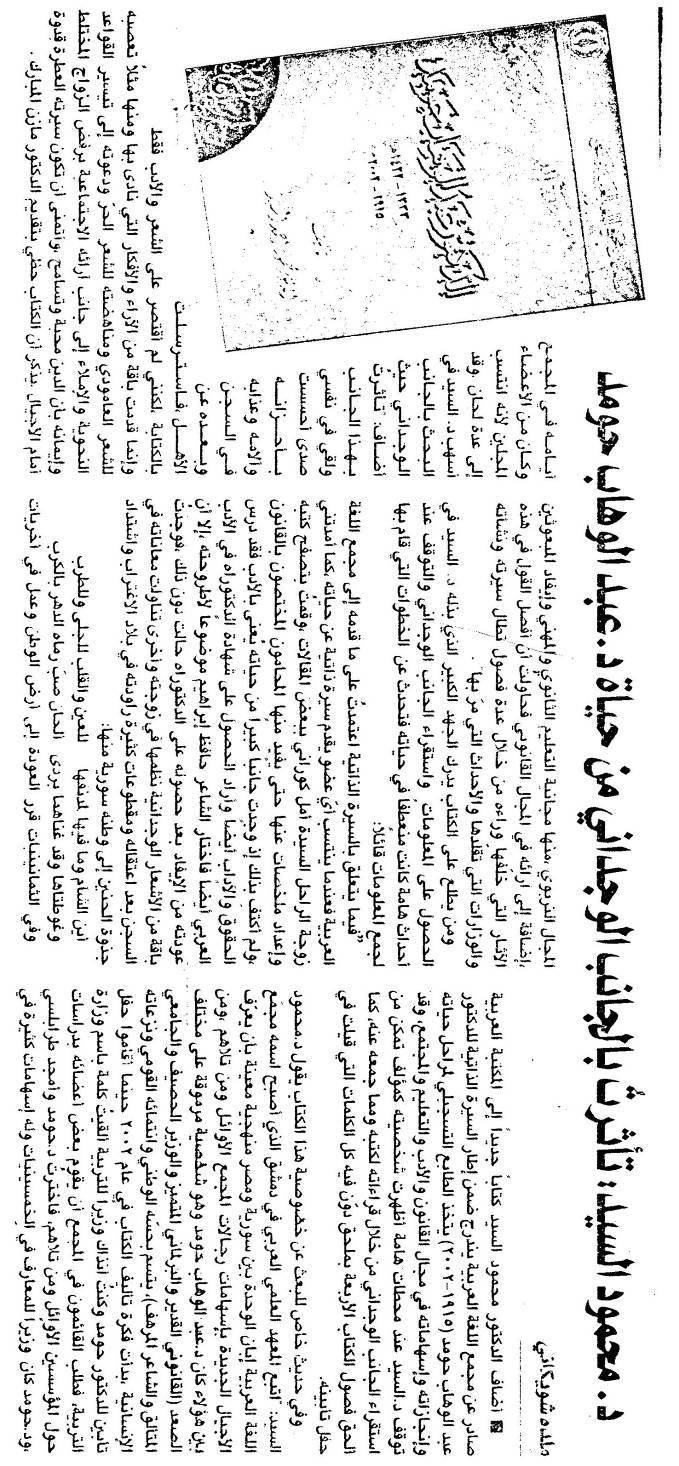
Dr. Mahmoud al-Sayyed: I Was Moved by the Emotional Side of Dr. AbdulWahab Homad's Life
Malda Shuwaykani
Dr. Mahmoud al-Sayyed has added a new book to the Arabic library, published by the Arabic Language Academy, falling within the genre of biography, covering the life of Dr. AbdulWahab Homad (1915-2002), taking a documentary approach to the stages of his life, his achievements, and his contributions in the fields of law, literature, education, and society. Dr. al-Sayyed pauses at important milestones revealing his own character as an author, one able to draw out the emotional dimension through his own readings of his books and what he gathered about him, and he appended to the book's four chapters a supplement recording every address delivered at his memorial service.
In a conversation with al-Baath about this book's own distinctive character, Dr. Mahmoud al-Sayyed says: "I followed in the tradition of the Arab Scientific Institute in Damascus, which became the Arabic Language Academy, honoring the contributions of the Academy's own early figures and those who followed them. Among them was Dr. AbdulWahab Homad, a figure of real standing across many fields (a capable legal scholar, a distinguished parliamentarian, a shrewd minister, a brilliant academic, and a sensitive poet), marked by his own patriotic feeling, his national belonging, and his humane inclinations. The idea for the book began in 2002, when a memorial service was held for Dr. Homad, and I was, at the time, Minister of Education, and delivered an address on behalf of the Ministry of Education. Those overseeing the Academy asked that some of its members undertake studies of the early founders and those who followed them, and I chose Dr. Homad and Amjad al-Tarabulsi. Dr. Homad had been Minister of Education in the 1950s, and made many contributions in the educational field, among them free secondary and vocational education and the sending of students abroad, in addition to his own views in the legal field, so I tried to give a detailed account of the legacy he left behind, through several chapters covering his own biography, upbringing, the ministries he held, and the events he lived through."
Anyone who reads the book will recognize the great effort Dr. al-Sayyed put into gathering information, drawing out its emotional dimension, and pausing at significant events that marked turning points in his life. He described the steps he took to gather this information, saying:
"As for the autobiography, I relied on what the Arabic Language Academy itself provided me, for any member joining it submits an autobiographical account of his own life, and the departed's own widow, Mrs. Amal Kourani, supplied me with some articles as well, and I leafed through his own books and prepared summaries of them, so that lawyers specializing in law could benefit from them. I did not stop there, for I found a large part of his own life devoted to literature, since he had studied both law and literature, and had wished to earn a doctorate in Arabic literature as well, choosing the poet Hafez Ibrahim as the subject of his own thesis, though his own return from his mission, once he had earned his doctorate, prevented him from completing it. I found a collection of deeply personal poems he composed for his wife, and others addressing his own suffering in prison after his arrest, along with many pieces that came to him in the lands of his own exile, as his longing for his homeland, Syria, grew ever more intense, among them:
'Where is Damascus, and what does it hold for one sick with longing for it,
for the eye and the heart, for splendor and for delight?
And its own Ghouta, watered by the Barada,
melodies of a lover struck down by fate's own hardship.'
In the 1980s, he decided to return to his own homeland, and worked, in his final years, at the Academy, becoming one of its most distinguished members, having joined several of its committees." Dr. al-Sayyed elaborated at length on the emotional dimension of his research, adding: "I was moved by this dimension, and found it resonating within myself, feeling his own sorrows, his own pain, and his own suffering in prison and away from his family, so I found myself carried along in the writing. But I did not limit myself to poetry and literature alone, presenting as well a range of the views and ideas he championed, among them, for example, his own passion for classical metrical poetry and his opposition to free verse, and his call to simplify the rules of grammar and spelling, alongside his own social views opposing mixed marriage and his belief that religion is love and tolerance, and I hope his own fragrant legacy will stand as an example before the coming generations." It is worth noting that the book carries a foreword by Dr. Mazen al-Mubarak.
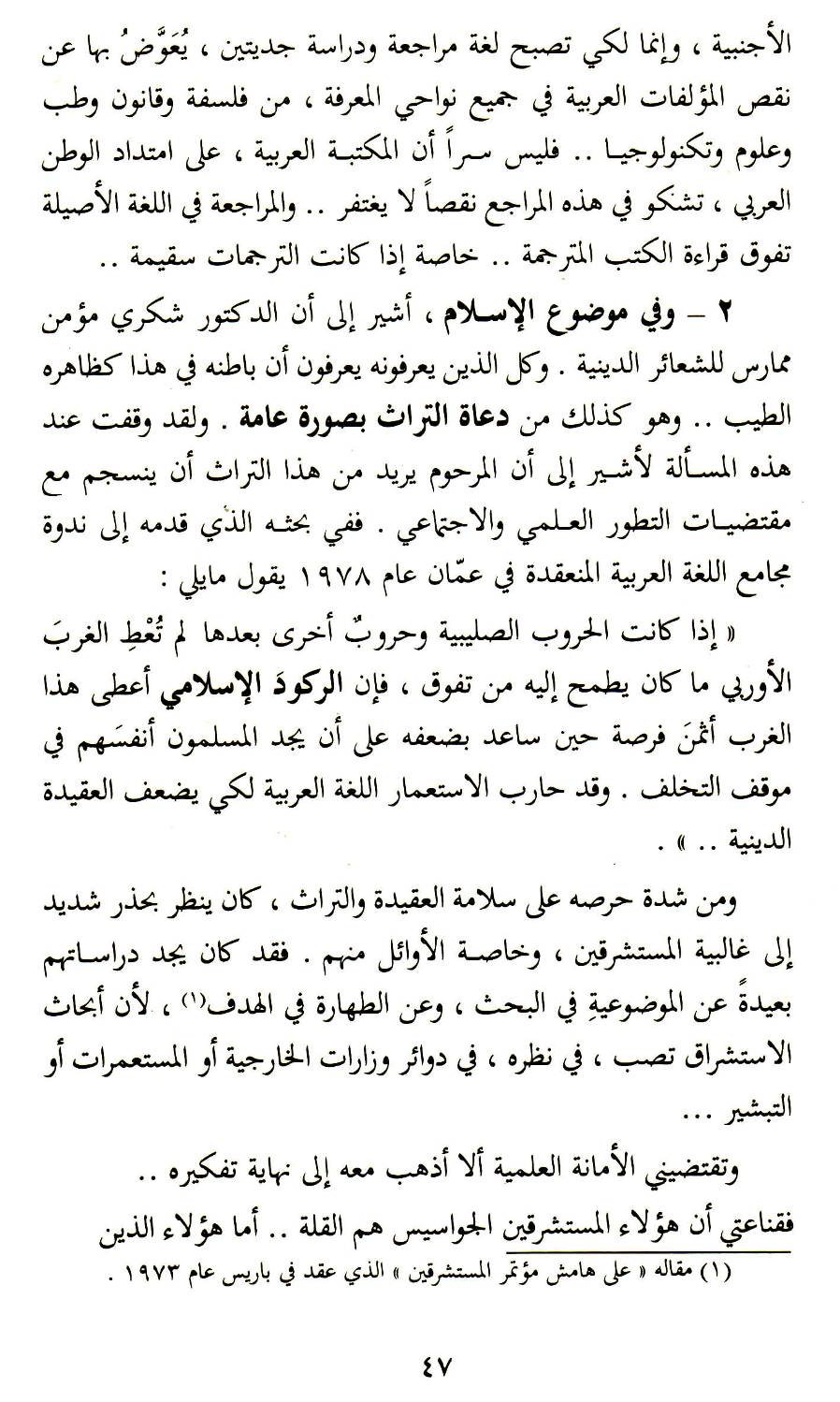
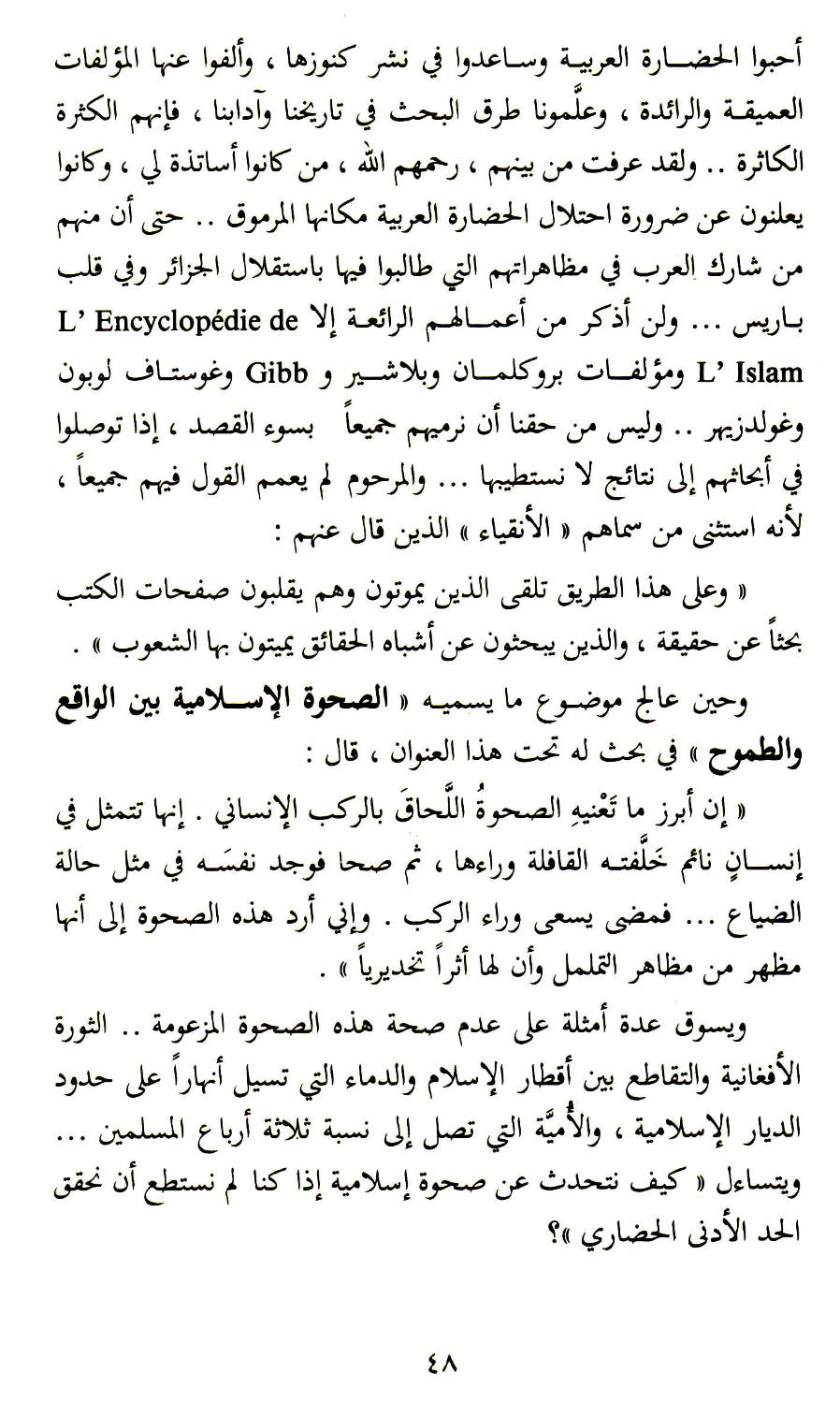
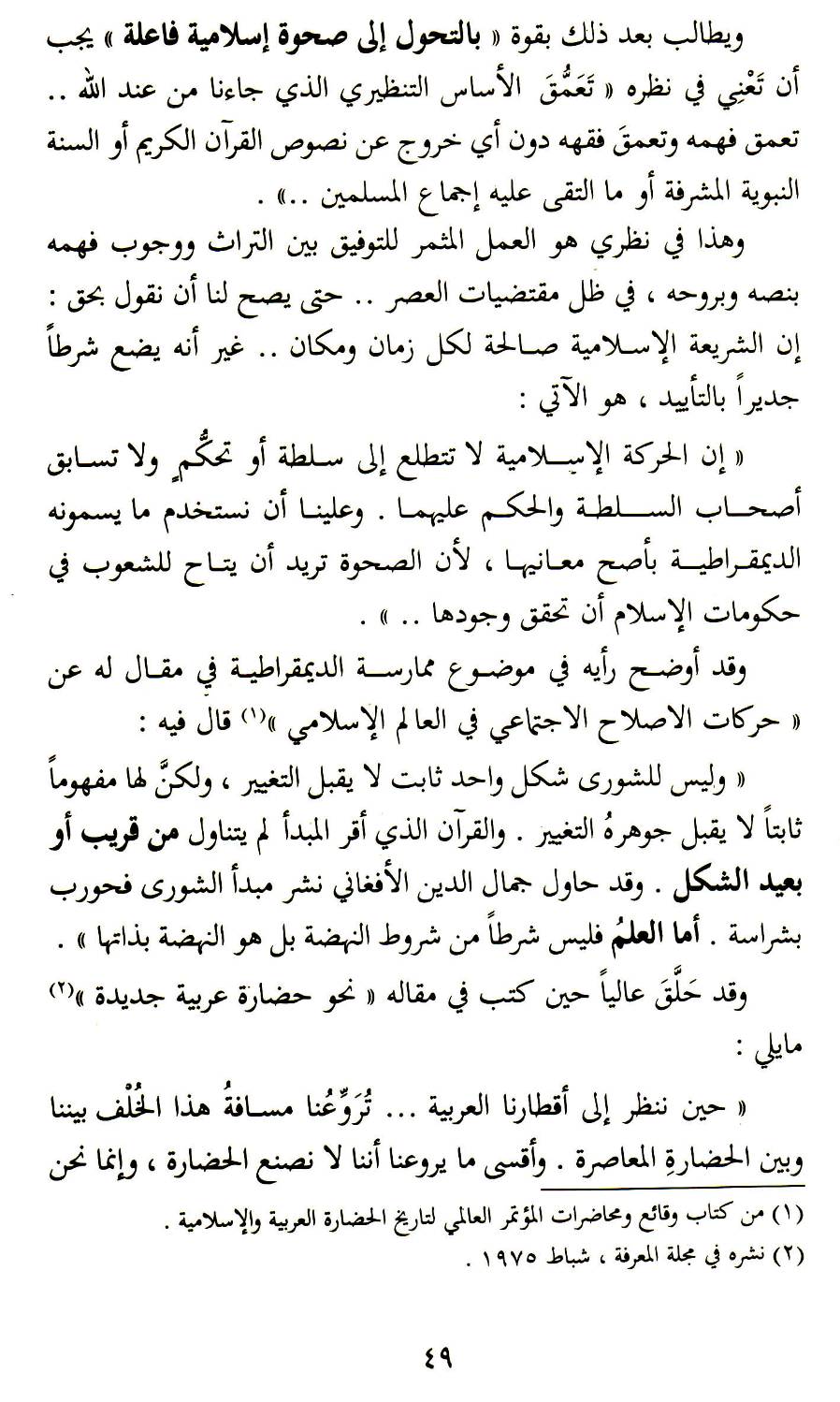
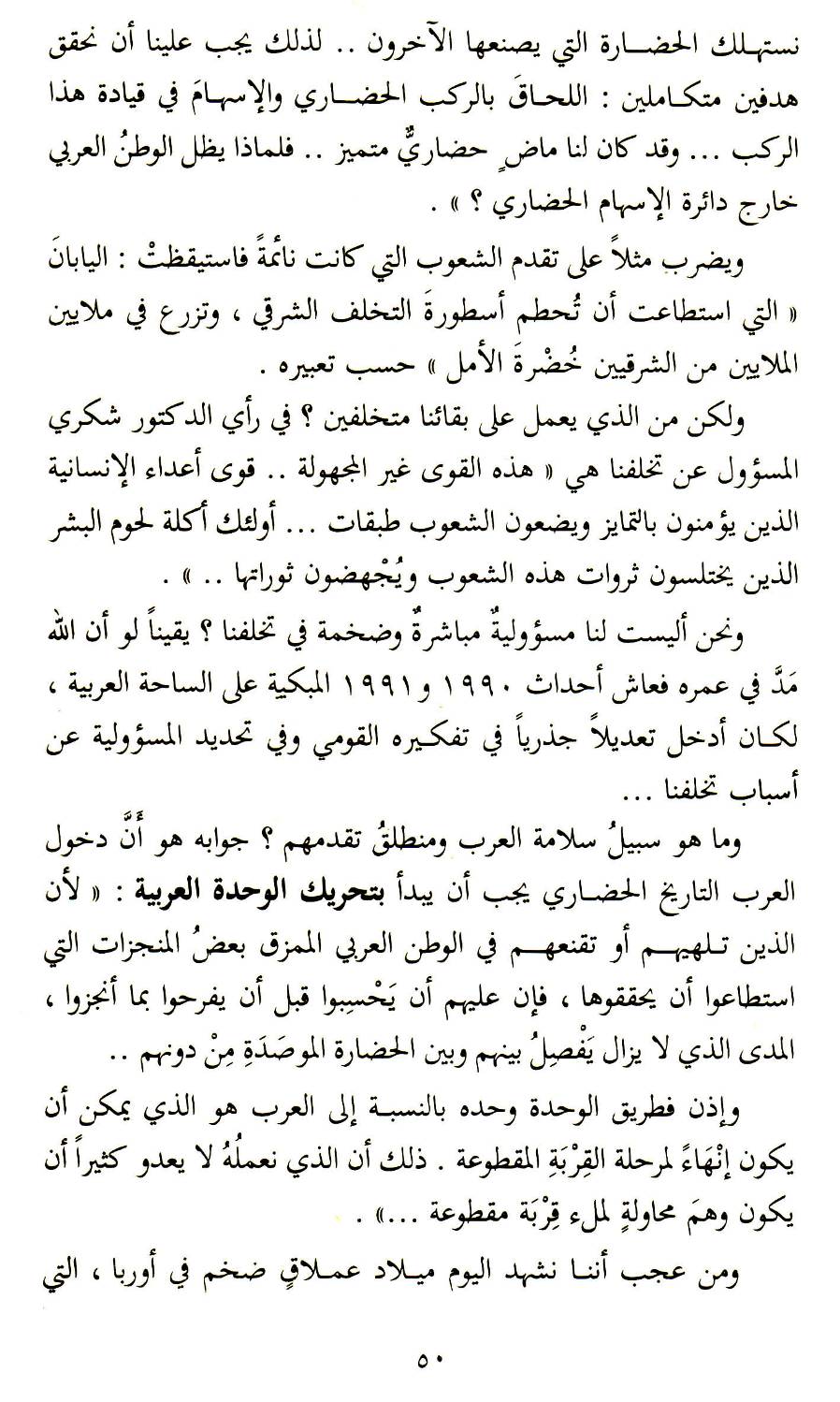
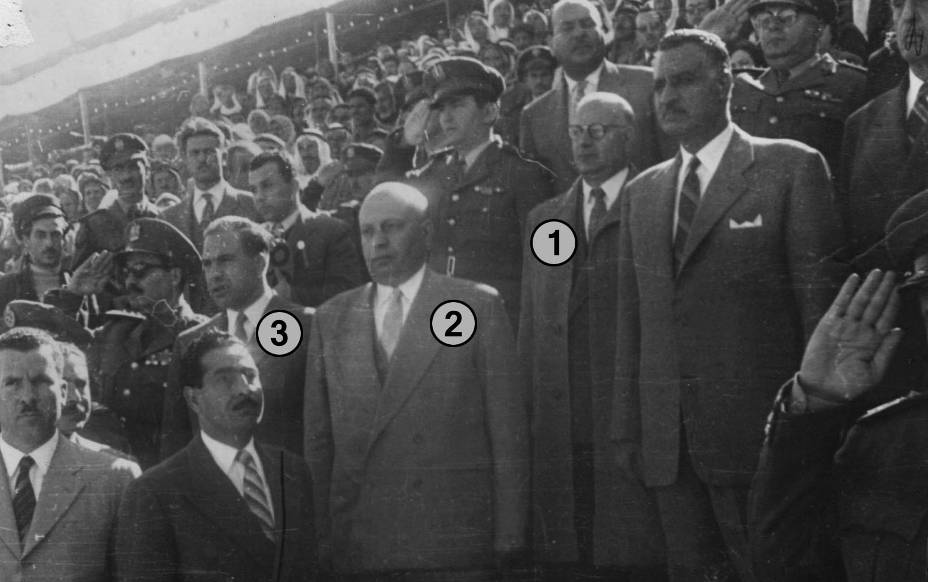
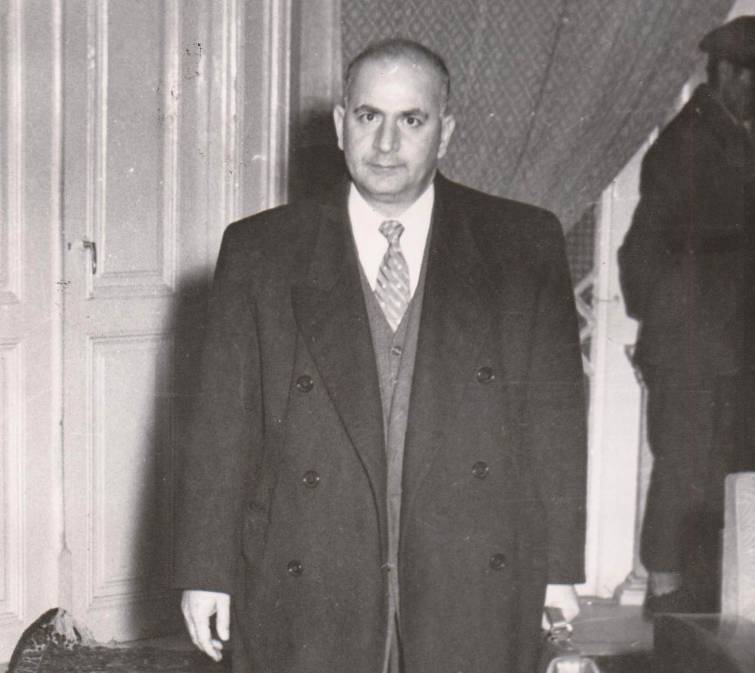
Photographs
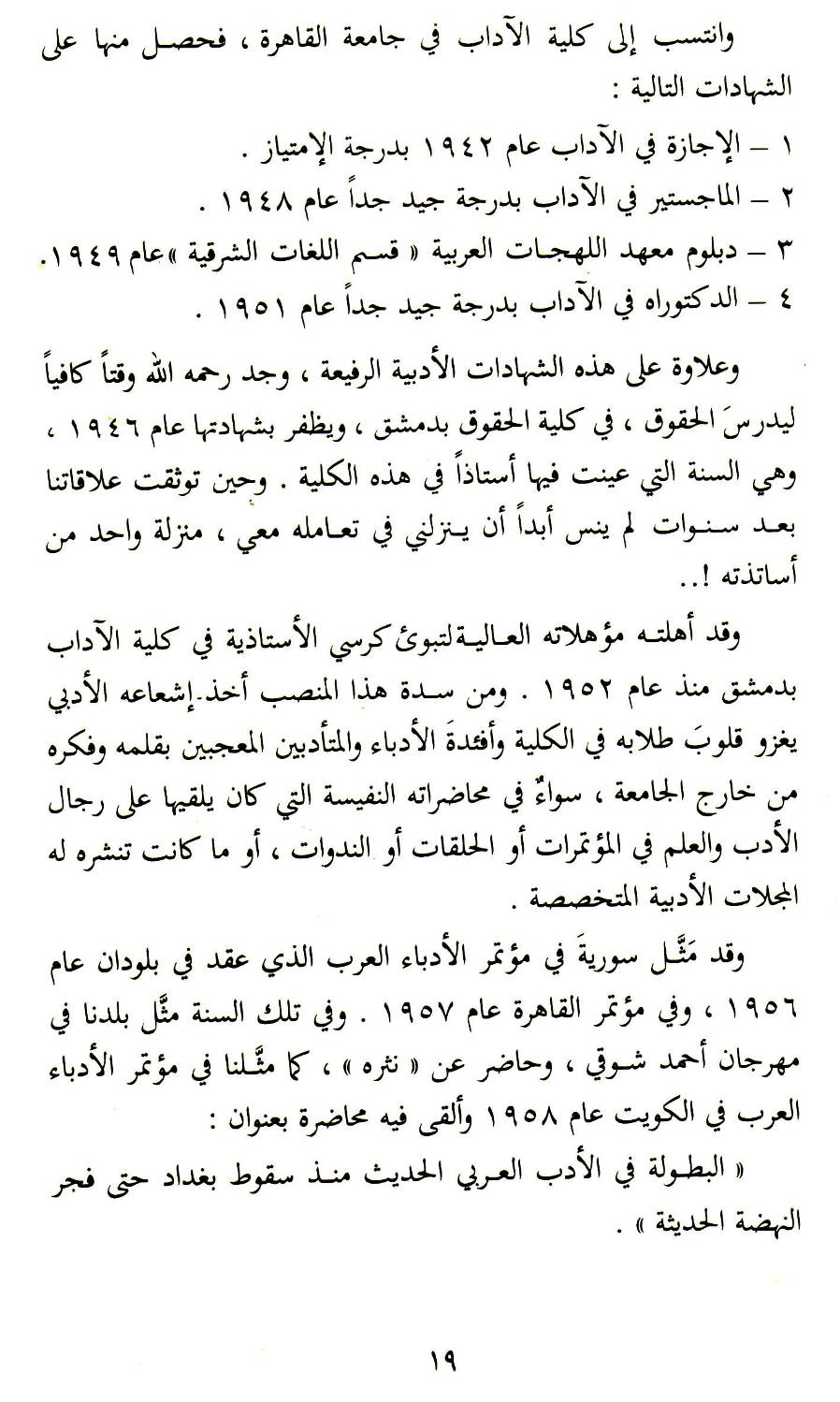
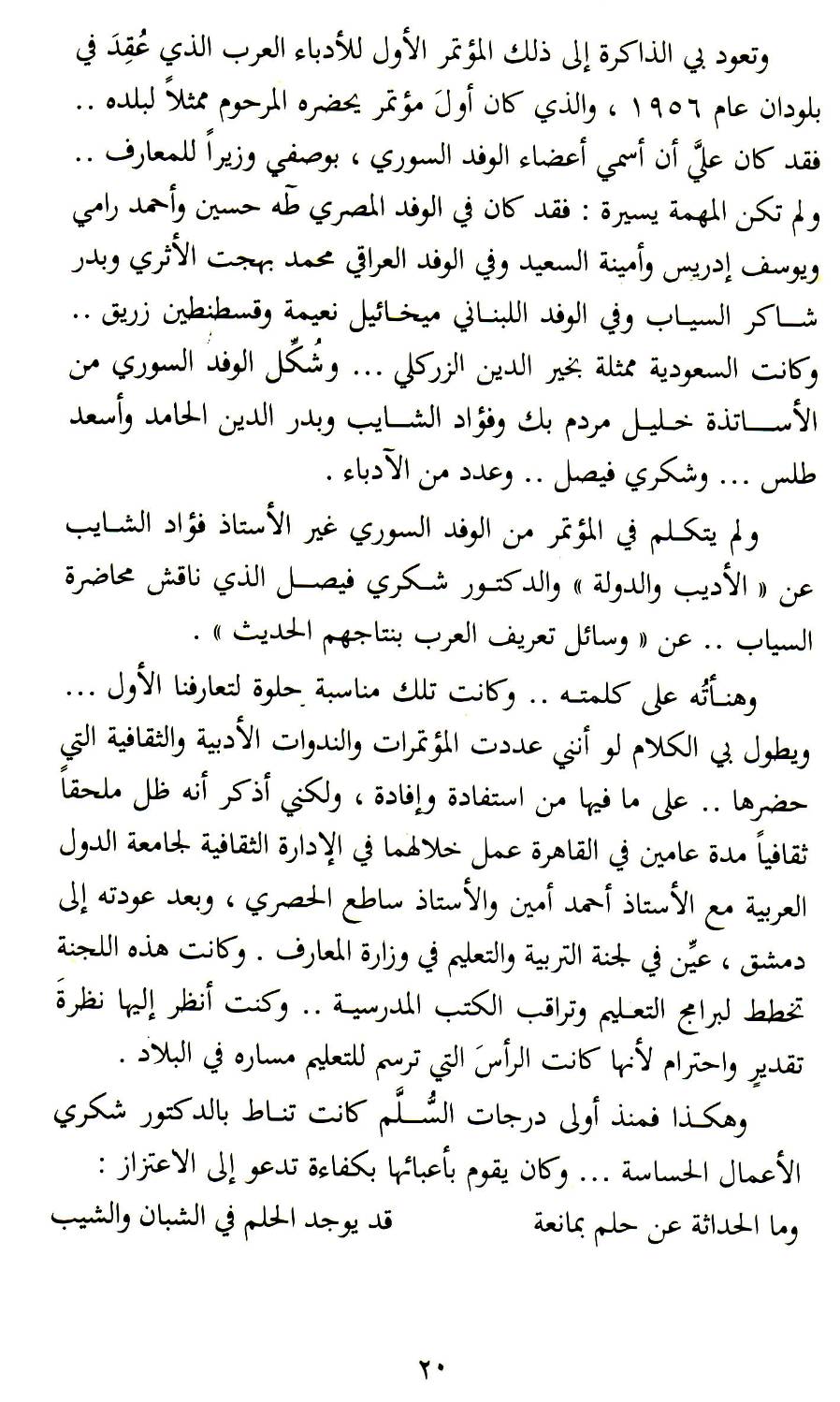
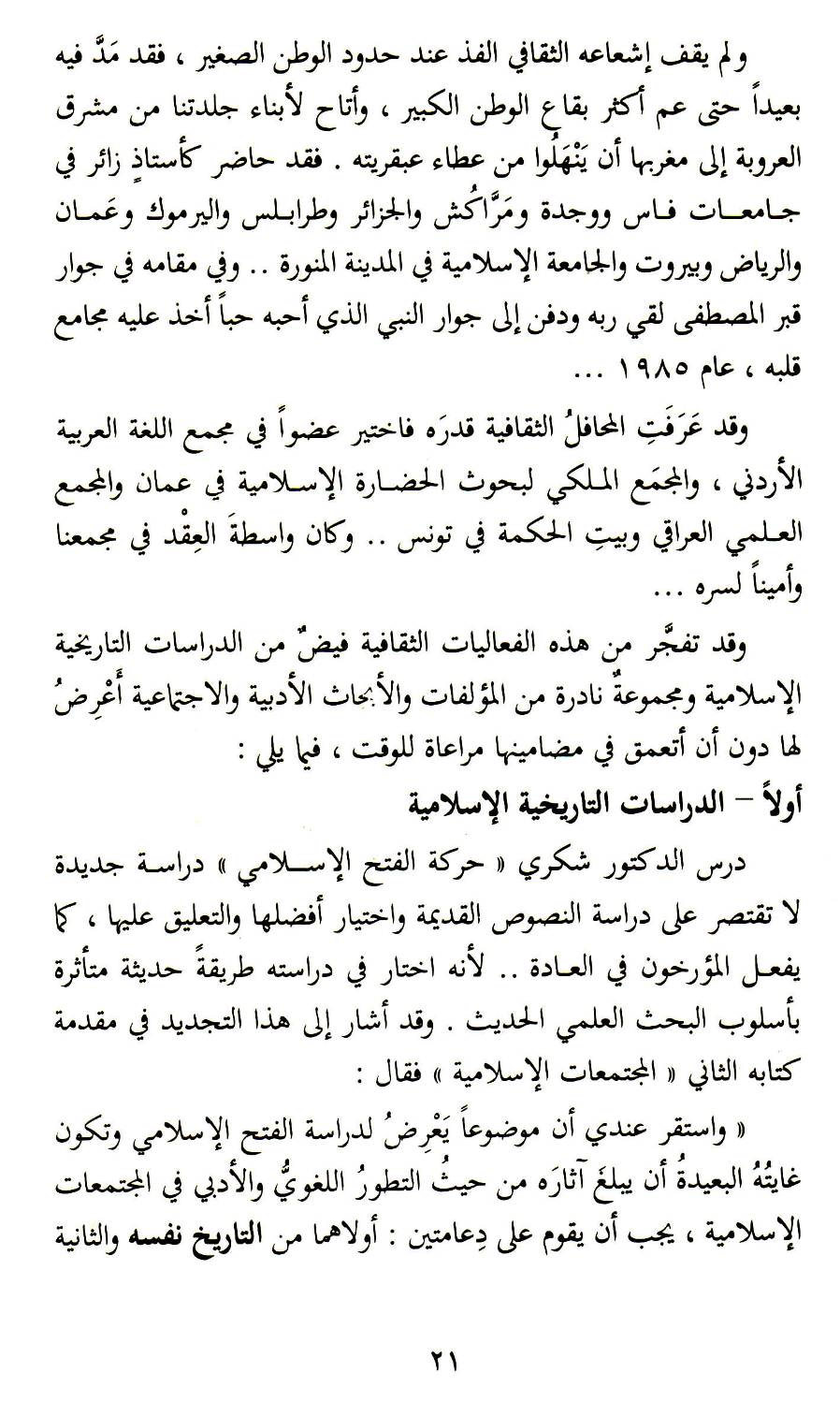
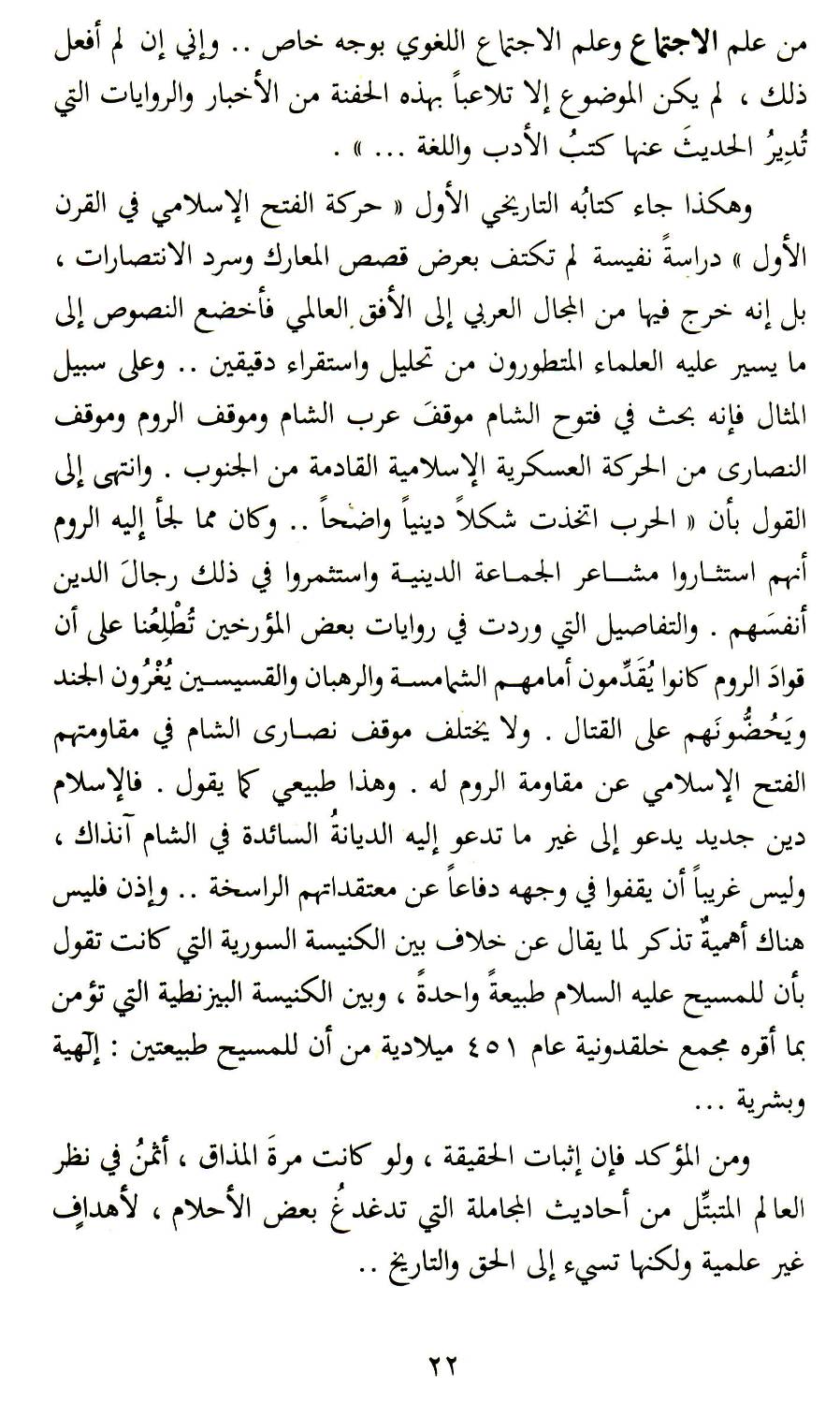
Photographs from the Academy induction ceremony and the 2002 memorial service, from the family archive. Individual captions are not shown here because the original extraction's photo-to-caption pairing could not be reliably verified for this set.