Foreword by Dr. Mazen al-Mubarak: Many Books in One
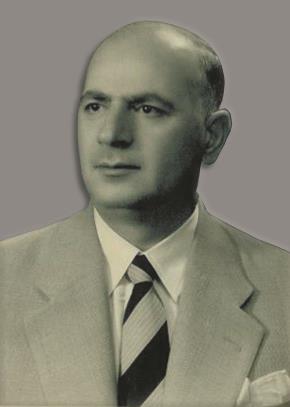
By Dr. Mazen al-Mubarak
Member of the Academy
"It will always remain my view that safeguarding human dignity is the most sacred duty that falls on the lawmaker and the man of government, and that the task of judicial punishment is to keep watch, as a worshipper keeps watch in his prayer niche, over the triumph of right and the defeat of falsehood, without any distinction between those who hold rights, so that every person feels protected by honorable guardians who, for God and for the truth, fear no one's reproach."
Dr. AbdulWahab Homad
Praise be to God, who decreed death for His servants: their bodies are gone, but their thoughts, their views and their words remain as torches of light, showing the road of life to those who come after them. This is one of many sayings, indeed resounding calls, that the legal scholar and full member of the Arabic Language Academy in Damascus, Dr. AbdulWahab Homad, may God have mercy on him, proclaimed in his books and from the platforms of universities and academies... The Academy has now seen fit to publish this book about him, written by Dr. Mahmoud al-Sayyed, a member of the Academy and its vice-president, following its custom of publishing books about its departed members that introduce those eminent scholars to the readers of today and to the generations that follow, bring their legacy back to life and keep their work in memory.
In this book Dr. al-Sayyed gives a full account of Dr. Homad's life that lets the reader accompany him through every stage of it. He has managed to unfold the biography into broad, clear pages that take the reader by the hand to follow Dr. Homad through his early years, in his home and at his school, at university and on his travels, in his life abroad and his hardships, on his return to his homeland and in his work across many fields, political, cultural, educational, academic and in the Academy itself. He even lets you keep him company in detention and hear him, from his prison cell, pour out his heart to his family...
It is a book whose author has managed, in every one of its paragraphs, to set before you a clear picture of its subject at every stage of his life. These are the pictures of Dr. Homad the diligent student, the eager and curious scholar sent abroad, the man of many talents: the legal scholar, the man of letters and poet, the writer and lecturer, the university professor who held the lecture platforms of the universities of Damascus, Rabat and Kuwait, the brilliant member of parliament, the able minister, the free politician, the patriot who fought for his country, the unbending prisoner, and the cultural ambassador who represented his state at Arab seminars and international conferences... Among all these pictures the reader will not miss one that stands out: that of Dr. Homad the faithful husband and the father who raised his children well. Nor, among them all, did I miss the picture of Dr. Homad as a full member of the Arab Academy of Science, a lover of the Arabic language, protective of it and deeply aware of its concerns...
I will not hide that when I read the book I found it to be many books in one. In it there is:
• A biography of Dr. AbdulWahab Homad.
• The story of the upbringing and schooling of a student whose life is typical of his peers: raised in his parents' care, moving from school to school and from city to city.
• One of those stories of the obstacles a university student meets that keep him from completing his university studies.
• The story of a study mission to the West, telling of the hardships of a student cut off from his homeland in a foreign country by the World War, whose outbreak kindled in him the eagerness to seize this forced opportunity to gain more knowledge and to satisfy his longing to study what he loved. So he studied law, which he loved, although he had been sent to study literature at the University of Paris. He managed to pursue both courses of study, or both specialties, at once, to earn the licence in each, and then to earn the doctorate in the law that he loved and stayed with for the rest of his life.
• In the book, too, is the story of a university lecturer whose name soon shone, who rose from post to post and was invited by universities, becoming one of the most prominent lecturers on their platforms in Damascus, Rabat and Kuwait: teaching and awakening the minds of university students, stressing the values of authenticity, openness and progress, and placing the fruit of his experience in their hands, saying: "From the beginning of my teaching at the Syrian University I held myself to a firm rule: that knowledge is the common property of all mankind, and truth stands higher than feelings. So I did not close the door of reason to it simply because it was not of our making, especially as we need to develop our minds and our sciences so that we can walk with dignity in the advancing procession of humanity."
• In the book is the portrait of the free politician and the patriot who neither softened nor changed, and whose fate was prison! He came to this conclusion: "The best way to strangle political crime in its cradle is democratic government, power that changes hands through free elections, a justice that gives every citizen a share of his country's wealth sufficient to his needs, and finally his enjoyment of freedom of speech and of writing and his sense of equality, without discrimination between citizens."
• It has pages about an expert and honest minister who did not sit in the minister's chair because he represented his party, but sat in it as an informed specialist who wasted no time in issuing whatever decisions his ministry needed... Such was Dr. Homad in the ministries he held, above all the Ministry of al-Ma'arif (Education).
• The book has pages about his distinguished work in the Academy, where he served his field so well that the scholars of that field said his studies "filled a great gap in the Arabic legal library, because no one else had gone as far as he did into a subject of such importance to law and politics."
• The book sheds light on the memoirs of an Arab student living abroad in France, in which the reader feels the hardships of daily life, the sudden turns of war, and the course of university life and study amid that turbulent existence. There you find news of examinations and results side by side with news of politics and politicians, of Western and Arab leaders such as Sheikh Amin al-Husseini, Rashid Ali al-Gaylani and Fawzi al-Qawuqji, and indeed news of the Arabs in general and of the people of the Maghreb in particular... All of this is in the memoirs of a student far from home whom the war forced to stay in Paris; in their lines you meet the personality of their author, his seriousness and his commitment to the causes of his country, his intelligence, his awareness and his loyalty to his friends and colleagues.
• And the book holds much that Dr. al-Sayyed has managed to bring out in a well-ordered account: a "biography" that he turned into many lives, a story he filled with events, and the views of a thinker that no specialty confined and no subject restricted. They ranged over law in all its breadth, literature with its themes and its arts, poetry old and new, the Arabic language and its questions, and its sciences of grammar, morphology and spelling...
What pleased me in this book (bringing together, as it does, all this variety of subjects, sciences and specialties within a framework of love for the Arabic language, of appreciation for its standing and for its influence on the life of the individual, society and the nation, and of a sincere and heartfelt call to serve it) is that it offers a practical explanation of the word "al-'Ilmi" (of Science) that was once part of the name "al-Majma' al-'Ilmi al-'Arabi," the Arab Academy of Science. Our perceptive predecessors in the Academy wanted it to include full members from among the "scholars" who were not specialists in Arabic, but who, whatever their specialties, were Arab linguists in their speech and their thought, in their hearts and in their zeal, mastering enough Arabic to serve their sciences through it and to serve it through their sciences. They are the Academy's scholars who bend their sciences to Arabic and express those sciences in Arabic. Dr. Homad and his colleagues in the Academy who were not specialists in Arabic, the physicians and chemists, the jurists, the scholars of the natural sciences, philosophy, psychology, sociology and other fields, gave the finest examples of the devoted scholar who serves both his Arabic language and his specialty, whatever that specialty may be.
That is what led the Academy to put the word "of Science" in its name and to open its doors to scholars of every specialty, on condition that they mastered their Arabic language and cared deeply for it.
Before I finish speaking of the book, it is perhaps fitting to recall that Dr. Homad's zeal was not for the language of the Arabs alone, but for the Arabs themselves: grief at their dispersal and sorrow at their division. As you read the book you cannot miss Dr. Homad's regret that the world today holds the Arabs in contempt because of their weakness, the feuding of their authoritarian governments, the deep roots of hateful regionalism and the absence of sincere devotion to national unity. Yet he does not leave you in your pessimism; he plants in you optimism and the hope that a day of glory will dawn:
What we suffer now we offer to God for your day of glory, in defense of our principles.
The scattered house will be whole again, and the great union will flood our homelands.
May God have mercy on Dr. AbdulWahab Homad and reward him, and may He reward Dr. Mahmoud al-Sayyed for his efforts in gathering and research, for his careful arrangement and analysis, and for the quality of his presentation. Thanks are due to the Arabic Language Academy for its loyalty to its departed members, and praise be to God, Lord of the worlds.