Chapter 13, Part 5: The Labor Pains of Union: Egypt's Identity
It may be useful to look at the intellectual climate that prevailed in Egypt.
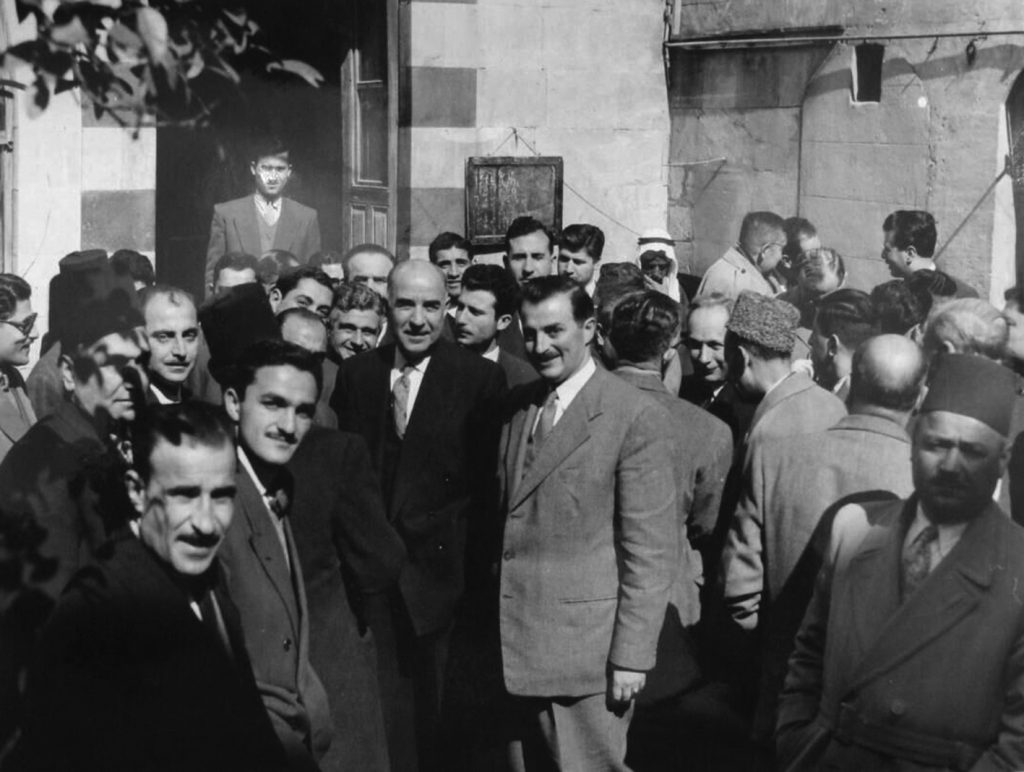
Ahmad Lutfi al-Sayyid was the first to use the term "Egyptian nationalism". He held that the slogan calling for "Pan-Islamism" (the Islamic League), meaning that the lands of Islam are the homeland of every Muslim, was a colonial slogan, and that the idea of Islamic unity was a failed idea, because the state rests, in his view, on common interest and not on common religious feeling.
From this starting point he called on Egyptians not to help the Turks against the Italians in the Libyan war of 1911, because "Egypt has no interest in it".
Saad Zaghloul and his colleagues in the Wafd Party were pupils of the school of Ahmad Lutfi al-Sayyid. Sati' al-Husri relates that he proposed to Saad Zaghloul that the efforts of the Egyptian movement be united with the Arab movement for the liberation of the Arabs, but Zaghloul answered him: If you add zero to zero to zero, what is the result?
The discovery of Tutankhamun's tomb in 1922 deepened the feeling of Egyptian nationalism and of its historical and cultural glories.
The abolition of the Islamic Caliphate by the Turk Mustafa Kemal in 1924 did much to revive the advocates of "the Egyptian nation"..
When Saad Zaghloul died, his tomb was designed in the form of a Pharaonic temple. In that period postage stamps began to carry pictures of the Sphinx, and the Egyptian University even took as its emblem the statue of one of the Egyptian gods.
Confirming this trend, Muhammad Husayn Haykal wrote his novel "Zaynab", the first written in Egyptian colloquial, to establish this "Egyptian nationalism".
Taha Hussein, the great man of Arab letters, called for "the Egyptianization of the Arabic language", because in his view the region (the land) is stronger than language. He held that the overwhelming majority of Egyptians have no tie to Arab blood, but are directly linked to the ancient Egyptians.
Among my memories of this subject: when we sailed on the ship Patria in 1938 to study in France, Taha Hussein came aboard at Alexandria on his way to Europe. We had heated discussions with him about the Pharaonic question, which he held to firmly, trying to soften its effect on our ears with talk of regional cooperation (his book The Future of Culture in Egypt, 1938).
In 1948 Dr. Muhammad Husayn Haykal came to Aleppo, and the municipality gave a dinner for him, to which I was invited as a deputy for the city. I debated "Pharaonism and Arabism" with him. But he held on to his Pharaonism, and tried to soften its effect on our ears by saying that Pharaonism did not rule out the idea of Arabism.
Fikri Abaza went to great lengths in calling for attachment to Egyptianness, and regarded the Arab conquerors as invaders, like the Hyksos, the Assyrians, the Persians, the Greeks, the Romans and the Turks.
No one disputes that Salama Musa was "one of the most extreme advocates of an Egyptian nationalism colored by Pharaonism", and so he went to great lengths in calling for the spread of Egyptian colloquial, and stated in his writings that no Egyptian has lived in the Nile Valley over ten thousand years without having in his blood "a drop of the blood that flowed in the veins of Ramses, Khufu and Akhenaten". He called vehemently for Pharaonic history to be taught instead of Arab history, and even counted the Egyptians as of European stock, bound to Europe by a single tie of blood.
The well-known historian Muhammad Abd Allah Inan took the same line. He asserted that it was impossible for Egypt to join the Arab countries, because Egyptian nationalism is ancient and authentic and "the Egyptian nation" has existed since the earliest ages of history. "As for the Arab League, it is a fanciful wish and a mirage that facts, circumstances and realism dispel."
Some intellectuals held that the best solution was to say that Egypt belonged to Mediterranean civilization, because it had been influenced by Greek and Roman civilization. And contemporary Western civilization is an extension of these two civilizations. So Western civilization must be adopted.
This appalling current met resistance from two currents that seemed different but in fact worked together: the Islamic current, which held that Egypt must belong to the Islamic nation, of which it had been part since Islam entered it, and the Arabist current, which proclaimed that Egypt is Arab, and the largest of the Arab countries.
The magazine al-Fath, founded by Muhibb al-Din al-Khatib in 1926, regarded "the Egyptian nationalist current as a conspiracy to diminish Islam". And Mustafa Sadiq al-Rafi'i attacked "those who came back from Europe dazzled by its glitter, made light of their whole heritage and began denying the Arab heritage and its sciences, with a wish to plot against Islam and serve European colonialism".
When the Second World War broke out in 1939, the Arabs and Muslims found themselves in the middle of a battle that was not theirs, yet they tasted some of its miseries, and the two camps drew closer to lessen the violence of the fierce war.
The Arabs' defeat in 1948 by the Zionist Jewish militias had a great effect in the retreat of the secular current and the revival of the Arabist current.
This reality was deepened by the revolution of the Free Officers led by Gamal Abdel Nasser in 1952, and for the first time his government adopted a clear doctrine in the constitution, which contained the decisive text that "Egypt is part of the Arab nation".
Syria was the first to adopt this text, in its first constitution of the era of independence in 1950 (Article 1, paragraph 3).
The provisional constitution drawn up for the state of union between Egypt and Syria in 1958 followed the same Arabist doctrine, laying down in its first article that the people of the United Arab State are part of the Arab nation.
From all of the above it is clear that Abdel Nasser's weight in particular was decisive in the victory of Arab nationalism in Egypt over the Pharaonic, secular, Mediterranean and other currents.[1]
The establishment of the union of Egypt and Syria was a resounding victory for those who believe that the Arab nation, from its ocean to its gulf, is one nation, and that it is its duty to strive for unity. All the more so since we live in an age of great international blocs.
Endnotes:
[1] See the study by Mr. Nabil Sadiq on "Egyptian Identity", published in the magazine Sabah al-Khayr on 23 May 2000.